
 Back to Home Page


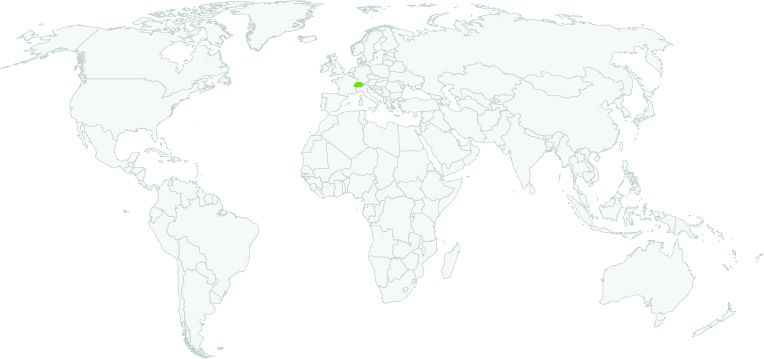

Mid July, the UK announced sanctions on 11 individuals and entities linked to Sudan’s conflict gold trade. The EU, followed by Switzerland, went further, banning the purchase, import or transfer of gold originating in Sudan, as well as restricting Sudan’s ability to get gold into the EU via other countries. This aims to shut down laundering of gold in third countries, such as the United Arab Emirates (UAE), a key trading route for illicit gold from Africa.
Welcome though these sanctions are, questions arise over whether the UK, EU or any other country has the means to effectively implement them: they will be only as strong as the customs system’s ability to verify origin post-refining. The Brussels-based World Customs Office defines the provenance of gold as the last country to have “substantially transformed it”, meaning gold refined in the UAE loses its Sudanese paper trail, and can be sold as ‘secondary gold’, with UAE designated as the new location of origin, or even as ‘recycled gold’.

In Ghana, a cocoa farmer waits an average of four years before seeing his first proper harvest. An illegal gold miner, on the very same land, makes a profit in a matter of weeks. Put like that, the contrast between the two commodities currently vying for the country’s land is almost self-explanatory — but behind that disparity in timeframes lies a specific regulatory decision (EUDR), taken in Brussels, which regulates one supply chain (cocoa) whilst leaving the other (gold) unchecked.
From a business perspective, the paradox is clear: Ghana is now the world’s second-largest cocoa producer, yet gold has already overtaken cocoa as the country’s leading export. Yet it is cocoa, not gold, that must underpin the investments in digital traceability, training for cooperatives and georeferencing systems required by Brussels. The Cocoa Traceability System developed by COCOBOD, the state body that manages the sector, uses field teams equipped with GPS-enabled smartphones to map every single farm.
Once gold is refined, you can no longer trace its source.’ A technical limitation that also becomes a limitation of the business model: according to Wiedmer, Switzerland manages around two-thirds of the global gold market, but ‘there is no regulatory body for the gold market’. The only point of reference is the London Bullion Market Association (LBMA), an industry self-regulatory initiative — “a project set up by the banks and refiners” — which sets standards without having the force of binding international legislation.
Gold is primarily an investment, so there is far less public pressure on this issue. Gold has institutional investors and savers who buy it as a safe-haven asset, often without any information about its mining origins.
In Switzerland, there is now a precious metals transparency platform developed by the technology firm aXedras on behalf of the Swiss Precious Metals Association (ASMP), which has been operational since 2023. It is an interesting attempt to apply the principles of digital traceability. But Swiss refiners no longer import gold from the Amazon region, but now the gold is sold in Dubai or directly in India.

Yet another report of Russian wood entering European supply chains despite sanctions.
The oligarch Alexei Mordashev, who runs Russia’s largest timber company and is also a close confidant of Vladimir Putin, is the main beneficiary of the timber deals.
After the start of the Ukraine war, Mordashov and Russian wood were sanctioned to keep the material out of the European market. However, research by SWR shows that trade via China will continue. Trade data show that with the start of the war, timber imports from China, especially to Poland, have risen massively.
Internal documents of a Russian timber company also reveal how wood is redeclared in China in order to then reach the EU unhindered.
SWR was able to use a hidden camera to document how dealers advertise plywood with “Russian quality”. Among traders, this is considered a synonym for wood from Russia. The Chinese subsidiary of a German-Swiss toy manufacturer also attracted attention – the company Hape International in Ningbo, China.
The example of Poland shows that countermeasures can work. Through targeted training for customs officials, including by Paged employees, Russian deliveries at the border could be identified and stopped. Since then, illegal imports from China have collapsed drastically. With the collapse of Chinese deliveries to Poland, import volumes via Spain and Portugal have multiplied since the beginning of the war.

Illegal gold mining remains rampant in the Amazon rainforest despite government efforts to curb it, reveals new analyses of satellite data from 2023 to 2024. According to the report by Greenpeace Brazil, national action to combat this destructive activity is not delivering a decrease, but rather a shift in the Indigenous territories affected. While mining activities reduced in Yanomami, Munduruku and Kayapó land (down 7%, 57% and 31%), Sararé land saw a dramatic surge, with illegal mining up by 93%.
Researchers also uncovered discrepancies in gold trade data. According to the investigation, Swiss imports exceeded Brazil’s reported exports by 67% in 2022 and 62% in 2023 – suggesting significant irregularities. in 2024, the top three destinations for Brazilian gold exports were Canada, Switzerland, and the United Kingdom – major international hubs for refining and trade.
Lula’s predecessor, far-right President Jair Bolsonaro deliberately weakened environmental controls in the Amazon. This triggered an explosion in exploration between 2018 and 2022, with a staggering 265% increase in illegal gold mining on Indigenous lands.[4] Since 2023, the current Brazilian government has intensified security and monitoring efforts in key areas. But Greenpeace Brazil’s research shows that illegal mining continues to adapt and spread across the forest – underscoring the urgent need for sustained, long-term strategies.
The Brazilian Supreme Federal Court recently ruled to close a legal loophole that had allowed buyers to accept gold without proving its origin, enabling illegal mining—often in Indigenous territories – to flourish unchecked. Gold buyers must now verify the legality of their purchases, and the government is required to enforce stricter oversight.

A new Greenpeace report, Nature Crime Files – Romania – Greenpeace International, followed the traces to the suppliers of furniture companies, such as IKEA. By closely examining the entire supply chain, from logging sites to wood depots, including scrutinising transport permits with geolocation attributes, and visiting processing facilities Greenpeace CEE found old-growth or other high conservation value destruction linked to at least seven different IKEA suppliers in Romania. Investigations identified at least 30 IKEA products, and some of IKEA’s well-known furniture, originating from these producers, raising a concern that wood from old-growth forests could ultimately end up in homes all over Europe and beyond.

According to Global Canopy, US$6.1 trillion in funding was provided to the 350 companies with the greatest risk exposures to tropical deforestation by some 150 financial institutions in 2023.
Through this exposure, land conversion presents numerous supply-chain risks to firms, namely:
- The reputational risks posed by adverse media (exacerbated further if linked to any human-rights abuses in the context of land conversion).
- The legal risks represented by increasing regulatory and legislative pressures on companies and financial institutions to prevent deforestation.
- The physical risks present, given that most bank-financed businesses and commercial services ultimately depend on natural capital and resources directly or through their supply chains. Aggressive consumption of resources reduces their availability in the long term, undermining sustainable development and creating economic instability. Indeed, the World Economic Forum (WEF) has estimated that at least 50 percent of global GDP is reliant on nature and warned that the impacts of climate change would significantly destabilise global trade.
The report, published on Thursday, estimates that Swiss pension funds contribute around CHF60 billion ($61 billion) to companies that are heavily involved in the destruction of tropical forests in South America, Africa and Asia.

The Zoological Society of London (ZSL), which, in its 2025 SPOTT assessment of 100 major forestry firms, reports that only 18% disclose the countries from which they source, and a mere 4% can trace their supply chains down to the forest management unit (FMU) level. At the same time, Wood Central understands that none of the companies assessed publish georeferenced maps for all third-party FMUs, and just 3% report what share of their supply is verified deforestation-free.
SPOTT assesses 100 timber and pulp producers, processors and traders on their public disclosure regarding their organisation, policies and practices related to environmental, social and governance (ESG) issues. Each company receives a percentage score to benchmark their progress over time. See further explanation of assessment scores here.
 Key Resources

 Methodology
 Data Tools
Click here to access the Global Illegal Logging and Associated Trade (ILAT) Risk assessment tool and to download the Forest Trends User Guide describing the functionality of the ILAT Risk Data Tool.
Click here to access the Cattle Data Tool.
 Export Restrictions
 Trending