
 Back to Home Page


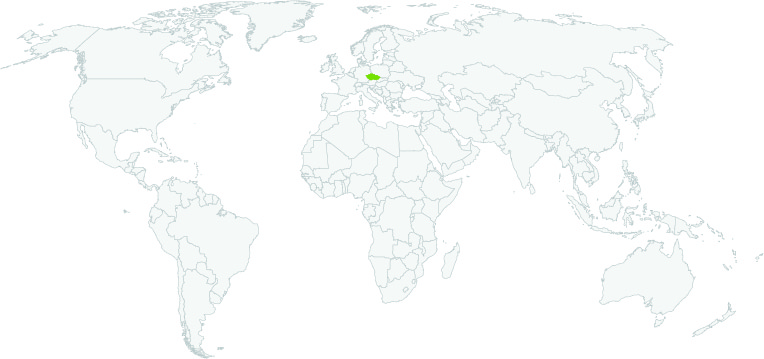

A US White House report identified more than 40 jurisdictions, including the EU, Canada, Japan, and Brazil, as associated with a higher risk for illegal transshipments.
This report identifies more than 40 countries associated with elevated illegal transshipment risk. These jurisdictions vary significantly in economic scale and function. Some are major trading partners with diversified industrial bases and large volumes of overall commerce. Others are closely integrated into China-linked production and supply networks. A third group consists of smaller jurisdictions that offer specific advantages, including low labor costs, permissive free-zone rules, strategic port access, bonded warehousing, limited customs capacity, niche assembly operations, or preferential access to the U.S. market.

Banned Russian timber is still reaching the Czech Republic, relabelled as Chinese, four years after European Union sanctions cut off direct imports of Siberian larch. That is according to a Czech media investigation which found shipments routed through China surging from a few tonnes a year to hundreds as direct Russian imports fell to zero.
The gap between paperwork and fibre is one forensic testing is increasingly asked to close, with Source Certain confirming it continues to detect Russian fibre in products at its service locations around the world, frequently accompanied by certification tracing to sources whose certificates were terminated when the war began.
Some transit states are moving to close the gap, with Kazakhstan tightening export controls to limit the passage of sanctioned goods. Estonian customs have brought more than 100 origin-fraud proceedings over timber routed through Kazakhstan, whilst Estonia and Poland have pressed Brussels to require exporters to prove their raw material is not Russian.
The Baltic countries have already warned Prague that the restrictions are being circumvented, a warning the Czech trade appears to confirm.
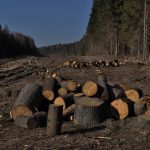
A Czech investigation has found Russian larch still reaching the country relabelled as Chinese, four years after EU sanctions cut off direct imports, in a trade Russia’s own figures show is now dominated by China.
That is according to a Czech media investigation, reported by Espreso.tv and carried by Ukraine’s 112 International, which found shipments routed through China surging from a few tonnes a year to hundreds as direct Russian imports fell to zero.
“The demand for Russian lumber is growing among friendly countries,” said Petr Mikka, head of information systems and the State Forest Register at the agency, confirming a 5 per cent rise on the 22.7 million cubic metres shipped in 2024. Softwood, the category that includes larch, made up 93.6 per cent of the wood sent to those markets.
That the relabelling is real, and not merely alleged, has since been confirmed at the highest level. A European Commission investigation found evidence of finished Russian plywood laundered and re-labelled as Kazakh or Turkish in origin, a breach of the sanctions imposed after the invasion, after inspectors confirmed firms in both countries were using Russian raw material to make birch ply for the European market.
The scale of that leakage is substantial, with an Earthsight investigation estimating timber worth some US$13 million enters the EU each month from Kazakhstan, China and Turkey, much of it tied to oligarch-owned firms and routed through false country-of-origin paperwork. The group has since filed complaints against 31 EU companies over Russian wood in their birch ply supply chains.
Under EU rules, sanctioned Russian and Belarusian wood processed to a sufficient level in a third country takes on that country’s origin, clearing it for import into markets where the ban applies. It is a threshold the bloc’s own sanctions envoy concedes is being gamed, with China a “very big problem” for the effectiveness of measures against Russia.
Some transit states are moving to close the gap, with Kazakhstan tightening export controls to limit the passage of sanctioned goods. Estonian customs have brought more than 100 origin-fraud proceedings over timber routed through Kazakhstan, whilst Estonia and Poland have pressed Brussels to require exporters to prove their raw material is not Russian.
The Baltic countries have already warned Prague that the restrictions are being circumvented, a warning the Czech trade appears to confirm. One Czech buyer, speaking anonymously to the investigation, described a supplier relationship that outlasted the ban: “One of our long-time Russian suppliers offered to keep delivering,” the trader said, having stopped buying Siberian larch when the war and sanctions began.

Chilean authorities seized 1,080.8 tonnes of timber chemically impregnated with cocaine, ketamine, and other narcotic substances, making it the country’s largest drug seizure to date. The investigation found that the wood itself had been infused with drugs, allowing traffickers to conceal narcotics within a legitimate timber shipment rather than simply hiding them inside containers. The contaminated timber originated in Bolivia and was intercepted at the Chilean ports of Arica, Valparaíso, and San Antonio following a six-month investigation. Authorities estimate the shipment contained approximately 108 tonnes of narcotics, with an estimated European street value exceeding US$8.3 billion. The intended destinations included Germany, Belgium, France, the Czech Republic, Spain, Portugal, Italy, the United Kingdom, the United States, Mexico, Morocco, Panama, Mauritius, New Zealand, and the Dominican Republic. The case demonstrates how legitimate timber supply chains can be exploited by sophisticated transnational criminal networks using advanced chemical concealment techniques. It also highlights the need for stronger customs intelligence, supply chain due diligence, and international cooperation to identify high-risk timber shipments used for trafficking illicit goods.
Also covered in English here: Drugs Hidden in Timber Behind Chile’s Record Seizure | Wood Central

The timber industry across the EU and UK has come together to assert its steadfast commitment to rejecting Russian and Belarusian wood products. Leading industry associations, including CEI-Bois, ETTF, EOS, and TDUK, have signed a united statement to reinforce their strong stance against illegal wood imports.
The statement, published on the Timber Development UK (TDUK) website, echoes the legal obligations and responsibilities that operators in the timber industry must adhere to. It outlines that the purchase, importation, or transfer of timber products originating from Russia or Belarus remains strictly prohibited under both EU and UK sanctions. This has been the case for several years, yet challenges remain in curbing the presence of prohibited wood in European markets.
The TV loop aims to identify and take action against instances of false claims or other violations of FSC requirements.
The scope of this Eurasia birch wood panels TV loop is:
- Geographic areas: China and central and eastern European countries (Bosnia and Herzegovina, Bulgaria, Croatia, Czech Republic, Estonia, Georgia, Greece, Hungary, Latvia, Lithuania, Moldova, Poland, Romania, Serbia, Slovakia, Slovenia, and Ukraine).
- Product type: Plywood
- Species: Birch (Betula)

According to this blog from the Environmental Investigative Agency (EIA), details of the convictions of one company and two individuals at the District Court of Amsterdam on 12 December 2022 have only recently been released in public court documents, with their names redacted, which confirm criminal convictions for importing teak from Myanmar into the Netherlands via the Czech Republic in breach of the EU Timber Regulation (EUTR) Article 4 and 6 due diligence provisions.
In 2018, the NVWA issued a warning to one of the Dutch companies involved which had been importing Myanmar teak into the Netherlands. The NVWA determined that, as the economic operator, its due diligence system for its imports of Myanmar teak failed to meet the due diligence obligations of the EUTR.
In response, according to an investigation carried out by the Dutch Prosecution service, the now-convicted directors set up a company, Fairwind Trading sro, in the Czech Republic and then transferred orders of Myanmar teak to this entity to avoid the detection of NVWA – while implemented the rejected due diligence system.
 Key Resources

 Methodology
 Data Tools
Click here to access the Global Illegal Logging and Associated Trade (ILAT) Risk assessment tool and to download the Forest Trends User Guide describing the functionality of the ILAT Risk Data Tool.
Click here to access the Cattle Data Tool.
 Export Restrictions
 Trending