
 Back to Home Page



The first Slavic Caravan block train has carried Belarusian timber into Central Asia, crossing Kazakhstan, a named laundering channel for sanctioned wood.
Belarusian wood cannot lawfully enter the European Union, as Council Regulation 2022/355 bans anyone under EU jurisdiction from importing, buying, or transporting wood products under Annex X since March 2022, and the United Kingdom enforces an equivalent prohibition.
Kazakhstan sits on the new corridor and on Europe’s laundering map at the same time, with Earthsight research putting more than €1.5 billion of Russian and Belarusian birch plywood into the European Union through third countries since sanctions took effect. Its investigators traced a further €273 million through China, Kazakhstan, Turkey, and Georgia between November 2024 and April 2025.
“It is obvious that there is an increasing number of countries and intermediaries,” Nerijus Mačiulis, chief economist at Swedbank Lithuania, told OCCRP of the routes helping Russia bypass sanctions. That investigation counted EU wood imports from Kazakhstan and Kyrgyzstan climbing from €445,000 across 2020 and 2021 to more than €30 million between June and October 2022 alone.
Uzbekistan has attracted Russian and Belarusian exporters as it expands into a Central Asian trade hub, with Chinese-funded rail, road, and sea projects underway, and fears that the country could become a new trading post for conflict timber.
It comes as Minsk turns its trade east, with Belarusian lumber exports to China rising 25 per cent in June, while Russian shipments to the same market fell 30 per cent.

Poland is the new gateway for Belarussian timber, with the import of timbers (via Kazakhstan) surging. A joint investigation involving the Belarussian Investigative Center, Radio Free Europe, and Polish newspaper Gazeta Wyborcza alleges that Polish imports of timber from the largely deforested Kazakhastan grew from €14 million (pre-war) to more than €68 million last year as part of a €126 million global trade in conflict timber.
Also featured in Belarus evading EU sanctions by importing timber to Poland with false documents, finds investigation | Notes From Poland and Fraud Exposed: Poland Now EU’s Ground Zero for Conflict Timber | Wood Central
Russia and Belarus are ramping up timber exports to Uzbekistan amid fears the former soviet state could act as a new trading post for conflict timber entering global timber supply chains.
It comes as Uzbekistan is spending billions on new rail, road and sea infrastructure, funded by China’s Belt and Road Initiative, forging new pathways for timber to infiltrate global supply chains.
Already, Uzbekistan is Russia’s second-largest importer of softwoods, with 480,000 cubic metres of timber (or 11% of its total imports) imported into the country every quarter – in what is a significant escalation in trade since the start of the Russian invasion of Ukraine.
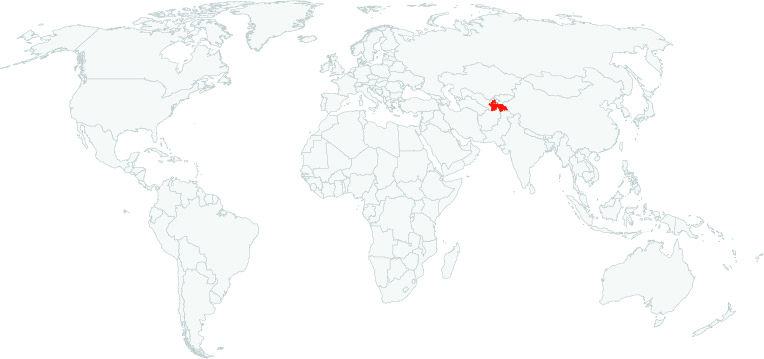
It comes as Wood Central reported in July that a block of ten countries – including Uzbekistan as well as China, Kazakhstan, Belarus, Iran, Kyrgyzstan, the United Arab Emirates, Azerbaijan, and Tajikistan – is fueling a booming trade of conflict timber bypassing western sanctions.
 Key Resources

 Methodology
 Data Tools
Click here to access the Global Illegal Logging and Associated Trade (ILAT) Risk assessment tool and to download the Forest Trends User Guide describing the functionality of the ILAT Risk Data Tool.
Click here to access the Cattle Data Tool.
 Export Restrictions
 Trending