
 Back to Home Page


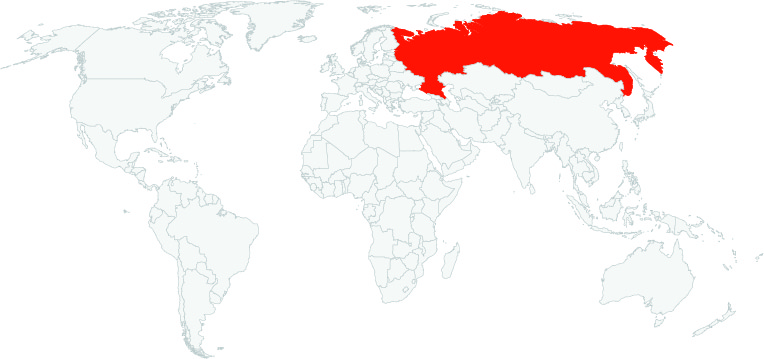

The free map told forest from non-forest correctly 95.5 per cent of the time across 8,190 sites worldwide, compared with 93.6 per cent for the Commission’s version.
See also: Not All Forests Are Equal: Mapping the World’s Forests — Google DeepMind and Global forest typology at 10-meter resolution for forest and land-use monitoring | Scientific Data

Thousands of cubic metres of illegally harvested Siberian timber are smuggled by rail into China and Central Asia in what has become big business, with two traders alone moving more than 9,500 cubic metres across the border in 2021. It comes as the East Siberian Transport Prosecutor’s Office revealed on Friday that the pair’s timber was “systematically exported by rail across the customs border of the Eurasian Economic Union, using documents containing false information.”
The Chernovsky District Court in Chita, capital of Zabaikalsky Krai, sentenced the two men to eight years each in a strict-regime penal colony. Both are Chinese citizens, the court has since confirmed.
Zabaikalsky Krai borders Mongolia and China, where the rail line heading south-east from Chita crosses the frontier at Zabaykalsk. Manzhouli, on the Chinese side of that crossing, is China’s largest inland port, where Russian timber is loaded onto trains.
Russia supplying 29.6 per cent of the wood China imports. Dr Tyron Venn, a University of Queensland resource economist, found the origin of timber is not tracked as it moves through China’s mills.

Russia is shipping more plywood to Turkey than it did a year ago, with August volumes up 9.5 per cent to almost 2,500 cubic metres, more than two years after Brussels found traders there re-exporting Russian birch panels into Europe. That is according to trade figures published overnight, with the month’s shipments worth US$1.5 million at an average of $615 a cubic metre, 5 per cent dearer than in July.
“This so-called forbidden importing from Russia, of course, is going on. It comes through Kazakhstan, through Turkey, through China,” Jaak Nigul, a director of the Estonian Forest and Wood Industries Association, said in February. The Tarmeko Group board member cited a packaging maker that had bought plywood from Kazakhstan for €550, while European plywood cost at least € 800.
Turkish mills could produce 17,000 to 20,000 cubic metres of birch plywood a year, the Commission estimated, yet 33,832 cubic metres of birch plywood reached the EU from Turkey in the twelve months to June 2023. “These imports could thus not be entirely constituted of birch plywood of Kazakh or Turkish origin,” the Commission’s regulation states.

The Chernovsky District Court of the city of Chita issued a verdict in a criminal case against a local resident. He was found guilty under Part 3 of Article 226.1 of the Criminal Code of the Russian Federation (smuggling of strategically important resources), Part 2 of Article 210 of the Criminal Code of the Russian Federation (participation in a criminal community).
The court found that in 2017-2019, the accused, as part of an organized criminal group, smuggled illegally harvested timber by declaring them falsely using forged documents. More than 29 thousand cubic meters of sawn timber worth over 220 million rubles were illegally exported across the customs border of the EAEU.
The court, taking into account the position of the public prosecutor, sentenced the guilty to 4 years in prison with serving a sentence in a maximum security penal colony with a fine of 500 thousand rubles with restriction of freedom for 1 year and 4 months with confiscation to the state of funds equivalent to the cost of illegally transferred lumber.
Australia has gone from selling engineered wood abroad in the early 2000s to importing two million cubic metres a year, with China supplying 43 per cent of the volume.
Elevated risk describes a banding rather than a finding of illegality, drawing every nation below the top tier of Forest Trends’ Global Illegal Logging and Associated Trade Risk Data Tool into a single group whose supply chains a desk check cannot clear. That band covers 68 per cent of Australia’s engineered wood import volume, with China supplying 43 per cent of the category on its own.
New Zealand, North America, and Western Europe together hold 32 per cent of the category, the only low-risk share left inside it, while Malaysia at 8 per cent and Indonesia at 6 per cent lead the tropical suppliers. Brazil and a group of other tropical developing nations take 3 per cent apiece, with Romania on 2 per cent and Thailand, Vietnam, and Russia each holding 1 per cent.

Nearly 783,000 cubic metres a year reach Australia through Chinese processing provinces alone, the largest single elevated-risk pathway in the report, with country of origin modelled province by province from General Administration of Customs statistics because provenance is not tracked once logs enter Chinese mills. Bilateral trade from Indonesia and Malaysia adds more than 310,000 cubic metres apiece, with Russia, Vietnam, Papua New Guinea, and Africa filling out a total of 1.95 million cubic metres of elevated-risk trade. Cameroon at 28,000 cubic metres a year, the Republic of the Congo at 22,600, Equatorial Guinea at 21,600, and Gabon at 14,900 head the African detail inside that total. Mozambique, Uganda, the Democratic Republic of the Congo, and eight further nations extend a Congo Basin and East African supply line that few Australian buyers would connect to their doors and decking.
No category carries more exposure than wood furniture, where 92 per cent of imports come from elevated-risk origins, and China alone accounts for 68 per cent. Engineered wood products follow at 68 per cent elevated-risk, with 43 per cent of the category from China, a supply chain reported separately today.
Builders’ carpentry reaches 70 per cent on the same measure, split mainly between China, Indonesia, and Malaysia, while 68 per cent of sawn hardwood imports carry the banding, with Malaysia the largest single origin. Sawn softwood is the exception, with 95 per cent of the category supplied by New Zealand, North America, and Western Europe, the only product line still dominated by low-risk trade.
“Even though importers fully meet their due diligence requirements,” the authors find, fraud in international supply chains can still put illegal timber, and wood from legal deforestation and plantation clearing, on the Australian market under the Illegal Logging Prohibition Act 2012.
Certified wood offers no clean exit either, with the global certified supply finite, so rising Australian demand for certified imports pushes other buyers onto uncertified wood. The paperwork gap is measurable: Source Certain testing released under freedom of information found that 37 of 74 sampled imported products were not the stated origin, species, or genus, or both.

The first Slavic Caravan block train has carried Belarusian timber into Central Asia, crossing Kazakhstan, a named laundering channel for sanctioned wood.
Belarusian wood cannot lawfully enter the European Union, as Council Regulation 2022/355 bans anyone under EU jurisdiction from importing, buying, or transporting wood products under Annex X since March 2022, and the United Kingdom enforces an equivalent prohibition.
Kazakhstan sits on the new corridor and on Europe’s laundering map at the same time, with Earthsight research putting more than €1.5 billion of Russian and Belarusian birch plywood into the European Union through third countries since sanctions took effect. Its investigators traced a further €273 million through China, Kazakhstan, Turkey, and Georgia between November 2024 and April 2025.
“It is obvious that there is an increasing number of countries and intermediaries,” Nerijus Mačiulis, chief economist at Swedbank Lithuania, told OCCRP of the routes helping Russia bypass sanctions. That investigation counted EU wood imports from Kazakhstan and Kyrgyzstan climbing from €445,000 across 2020 and 2021 to more than €30 million between June and October 2022 alone.
Uzbekistan has attracted Russian and Belarusian exporters as it expands into a Central Asian trade hub, with Chinese-funded rail, road, and sea projects underway, and fears that the country could become a new trading post for conflict timber.
It comes as Minsk turns its trade east, with Belarusian lumber exports to China rising 25 per cent in June, while Russian shipments to the same market fell 30 per cent.

Twenty-one Pacific Rim economies have signed a joint pledge to intensify the fight against illegal timber, with forestry ministers closing two days of talks in Shenzhen on commitments running from enforcement to wood in construction. That is according to the joint statement issued through APEC after the sixth Ministerial Meeting on Forestry, the first ecological ministerial China has hosted in 15 years.
Russian fibre still runs through timber sold on the Australian market, and is frequently accompanied by certification paperwork that cannot be legitimate because every Russian FSC and PEFC certificate was terminated when the war began.
That is according to Source Certain, the forensic science company behind the DAFF-commissioned testing cited throughout the Australian Senate’s sanctions inquiry, which has doubled down on its findings in a statement welcoming the committee’s recognition of scientific origin verification.

Banned Russian timber is still reaching the Czech Republic, relabelled as Chinese, four years after European Union sanctions cut off direct imports of Siberian larch. That is according to a Czech media investigation which found shipments routed through China surging from a few tonnes a year to hundreds as direct Russian imports fell to zero.
The gap between paperwork and fibre is one forensic testing is increasingly asked to close, with Source Certain confirming it continues to detect Russian fibre in products at its service locations around the world, frequently accompanied by certification tracing to sources whose certificates were terminated when the war began.
Some transit states are moving to close the gap, with Kazakhstan tightening export controls to limit the passage of sanctioned goods. Estonian customs have brought more than 100 origin-fraud proceedings over timber routed through Kazakhstan, whilst Estonia and Poland have pressed Brussels to require exporters to prove their raw material is not Russian.
The Baltic countries have already warned Prague that the restrictions are being circumvented, a warning the Czech trade appears to confirm.

The Australian Timber Importers Federation has rejected claims made during an Australian Senate inquiry that Chinese-made laminated veneer lumber (LVL) and plywood contain Russian conflict timber, arguing there is no evidence that its members are importing Russian fibre and emphasizing support for robust enforcement of Australia’s illegal logging laws. The federation contends that most imported LVL is manufactured from plantation-grown radiata pine, masson pine, eucalyptus, and spruce rather than Russian boreal species, and that declining import prices reflect changes in the product mix rather than dumping. However, the debate follows testimony citing forensic testing suggesting that Russian timber may still be entering Australia through third-country processing, while a government-commissioned provenance study also found significant discrepancies between declared and verified timber origins. The dispute highlights growing disagreement over whether documentary due diligence alone is sufficient to verify timber origin or whether scientific forensic testing should play a larger role in enforcement.

Source Certain has doubled down on its finding that Russian fibre is reaching the Australian market carrying certification paperwork that cannot be legitimate, as Australian senators weigh the future of timber sanctions.
“Source Certain can confirm that it continues to detect Russian fibre in products at its service locations around the world, including in Australia,” the company said. “This timber fibre frequently enters the market accompanied by supply chain documentation and due diligence indicating the product is traceable to a sustainable source certified under third-party certification schemes.”

Reduced harvesting in Australia’s native forests is driving timber demand offshore to countries with a high risk of illegal logging and deforestation, a pattern that has pushed the nation’s overseas harvest footprint far beyond the domestic one it is meant to replace.
According to Dr Venn, the volume of timber cut in Australia’s native forests has fallen by 75 per cent over the past three decades, with local hardwoods used for floors, windows and joinery displaced by a surge of tropical timber from countries with high risks of deforestation, degradation and timber trafficking. “Imports make up 46 per cent of timber traded in Australia,” Dr Venn told the dinner, a rise from just 24 per cent in 1996.
And of those imports, Dr Venn revealed that about half originate in countries rated as high-risk for illegal harvesting, deforestation, and forest degradation, with large volumes routed through China and traced back to PNG, the Solomon Islands, Russia, South and Central America, and Southeast Asia.

A drop from a US$311 million profit in 2021 to a $142 million loss by 2024 has left about half of all forestry firms unprofitable and dozens facing bankruptcy, as exports collapse across China, Japan and South Korea.
About half of all forestry companies were loss-making last year, the study found, with revenue falling, reserves depleted, and high interest rates effectively closing off access to new financing. Within that, smaller producers carry the heaviest exposure, holding the thinnest reserves and the least room to absorb costs that keep climbing as their order books shrink.
Sawn-timber shipments to China falling 30 per cent year on year to 2.6 million cubic metres in the first four months of 2026. Export revenue from that trade dropped 26 per cent to $603.7 million over the same period, according to the Vedomosti business daily, citing data from Lesprom Network. Driving the China slump is a property downturn that shows little sign of easing, with home sales by value down 9.5 per cent in 2025 to their weakest level since 2009.

Senators were told that 100,000 cubic metres of imported timber a year are at high risk of containing Russian fibre, including even the FSC-certified toilet paper in Parliament House.
Richard Hyett, the Australian Forest Products Association’s acting chief executive, told senators that Australia had become “the dumping ground for conflict timber”. Russian logs are cut and reglued into laminated veneer lumber in China, then clear the substantial transformation test and ship out tariff-free — a step Hyett said was legal because “it’s not illegal to transform a product in China”.
When the EU tightened its own rules, Chinese mills glued a thin layer of softwood to the outside of the product so it would be reclassified and dodge the tariff, forcing Brussels into a fresh anti-dumping action.

Researchers at University of Queensland state that for every 100,000 cubic metres cut from Australia’s native forest production, imports rise by 81,300 cubic metres in the long run, and 86.8 per cent of the replacement wood came from elevated-risk nations.
Wood routed through Chinese processing provinces has reached nearly 783,000 cubic metres a year, the largest single elevated-risk pathway in the analysis, with China now supplying 30 per cent of Australia’s solid wood imports.
This report was commissioned by the North East NSW, South East NSW, South & Central Queensland, North Queensland and Tasmanian Regional Forestry Hubs with funding from the Australian Government, Department of Agriculture, Fisheries and Forestry.
Nearly half of Russia’s forest-sector companies ran at a loss last year, with about 45 per cent of logging firms and 48 per cent of wood-processing businesses unprofitable through 2025 as rising lease costs squeezed the industry.
Deputy Prime Minister Dmitry Patrushev has instructed ministries to review a bankruptcy moratorium and a delay to higher forest-plot rents, a package discussed at a 27 May government meeting.
Russia’s largest forest company has reported a net loss of 88 billion rubles (around US$1.1 billion) last year, four times the prior year’s 22 billion ruble loss.
China took 77 per cent of Segezha’s lumber last year, yet weak demand and a strengthening ruble drove a 9 per cent sales drop as Canada, Sweden and Finland moved into Russia’s former volume.
To explain the reduction in trade to India, Segezha cited tariff restrictions and India’s BIS certificate requirement as factors squeezing exports, reporting a 50 per cent jump in domestic shipments to end customers in Russia as a partial offset.

Russian timber and cellulose exports have collapsed by 50 per cent between 2021 and 2025, the steepest fall of any sector tracked by NATO-frontline intelligence across four years of Western sanctions.
Russia was the world’s largest softwood lumber exporter in 2021, ahead of its February 2022 invasion of Ukraine, with its timber and pulp industries deeply integrated into European supply chains before the EU banned Russian timber imports under the fifth sanctions package in April 2022, and FSC and PEFC both suspended Russian certificates from their global certification schemes.

Analysts warn 90 per cent of Russia’s logging equipment will be dead by 2028 — and with the Kremlin planning a 50 per cent rent hike on forest plots, Moscow shows no sign of throwing the industry a lifeline. Commercial harvests have dropped ten per cent last year to just 176 million cubic metres, nearly a third below where the industry stood a decade ago. The Moscow Times reported timber harvesting fell 13 per cent in 2024 compared to pre-war levels, with lumber production down 11 per cent and plywood output collapsing 23 per cent. The cause, analysts say, is structural. Not cyclical.
Before the war, Russia accounted for roughly 22 per cent of the global softwood lumber trade. Western companies exited en masse, equipment imports stopped, and FSC and PEFC stripped Russian timber of its sustainability certifications.

Vietnam’s timber exports reached a record $18.5 billion in 2025, up 6.6% year-on-year, with more than 45% of exports going to the United States, worth over $8 billion. The sector is now seeking to diversify into 45 global markets as new US trade pressures emerge, including a preliminary 196% antidumping duty on Vietnamese hardwood plywood imposed by the US Department of Commerce.
Industry leaders warn that reliance on the US market and weaker EU demand could threaten the government’s $25 billion timber export target by 2030 without investment in greener production and modern technology. Japan became Vietnam’s fastest-growing major market in 2025, with exports rising 23% to $2.15 billion, followed closely by China at $2.09 billion.
Together, the US, Japan, and China account for about 80% of Vietnam’s timber export value, while Canada, Europe, the Middle East, and India are emerging markets that currently do not impose tariffs on Vietnamese wood. Vietnam is also expanding sustainability measures, with more than 520,000 hectares of planted forests FSC-certified and a target of one million hectares by 2030.

Estonian producers say laundered timber disguised through Kazakhstan, Turkey, and China is undercutting compliant operators by up to 30%.
An example of the price differential at play. “A few days ago, we made an offer to one packaging company that makes plywood boxes. They said that European plywood costs at least €800. But they said they bought it from Kazakhstan for €550.”

Estonian producers say laundered timber disguised through Kazakhstan, Turkey, and China is undercutting compliant operators by up to 30% — as customs authorities push Brussels for tighter controls.
Sanctioned timber from Russia and Belarus, disguised under false country-of-origin documentation, continues to flood global wood markets — and legitimate producers are paying the price. That’s the message from the CEO of one of the Baltic region’s leading manufacturers, who says the flow of sanctioned wood is driving prices down across the board. Opmann said timber is routinely offered at prices 20 to 30 per cent lower than the market standard, creating a competitive headache for compliant operators.
The ban covers wood and related products exported from Russia and Belarus, but if sanctioned material is processed and transformed to a sufficient level in a third country, that country becomes the official origin, enabling import into EU and UK markets where sanctions apply.
Through 2024 and into 2025, the Estonian Tax and Customs Board (ETCB) ramped up controls on plywood imports from Kazakhstan and China, leading to a significant drop in volumes. The agency said last August it had initiated over 100 proceedings for origin fraud connected to timber imports from Kazakhstan, finding in many cases that the processing carried out there was insufficient to confer Kazakh origin on the product.
Russia’s timber supply chain is pushing to block new changes to the Russian Forest Code, warning that new requirements requiring logging firms harvest at least 70% of their allowable cut every four years are simply unworkable.The amendment was introduced last month by the Arkhangelsk Regional Assembly, in one of Russia’s largest and most heavily forested regions and home to major producers including Segezha Group, Ilim Group, and Titan Group. Industry indicates that low utilisation rates reflect fundamental constraints rather than under‑harvesting – specifically, the impact of international sanctions against Russian wood, outdated forest‑inventory data, and missing parcel identifiers in federal registries.

Russia has passed a law that effectively allows large-scale logging in the environmental protection zone around Lake Baikal – one of the world’s most valuable ecosystems.The document takes effect on March 1, 2026 and is officially described as the “Baikal Preservation Law.” According to intelligence, its main aim is to create a cover for large-scale industrial logging with a predominant focus on supplying timber to China.

The timber industry across the EU and UK has come together to assert its steadfast commitment to rejecting Russian and Belarusian wood products. Leading industry associations, including CEI-Bois, ETTF, EOS, and TDUK, have signed a united statement to reinforce their strong stance against illegal wood imports.
The statement, published on the Timber Development UK (TDUK) website, echoes the legal obligations and responsibilities that operators in the timber industry must adhere to. It outlines that the purchase, importation, or transfer of timber products originating from Russia or Belarus remains strictly prohibited under both EU and UK sanctions. This has been the case for several years, yet challenges remain in curbing the presence of prohibited wood in European markets.
More than three quarters of Segezha’s processed lumber is already traded into China, with Russia’s timber industry looking to import more and more lumber, plywood and pulp through Shanghai’s Lingang Special Economic Zone.
The Segezha Group, Russia’s largest forestry and wood‑products company, will now formally establish a manufacturing and logistics cluster in Shanghai’s Lingang Special Economic Zone, a move that marks one of the most significant expansions by the Russian timber giant since the West hit the industry with sanctions in the wake of the Ukraine war.
In a statement to Russian media, Segezha said it plans to build converting facilities for consumer packaging, along with a manufacturing and distribution centre for birch plywood and planed products. The cluster, to be located inside the fast‑growing Lingang zone, is intended to strengthen the company’s foothold in China and the wider Asia‑Pacific region.
Yet another report of Russian wood entering European supply chains despite sanctions.
The oligarch Alexei Mordashev, who runs Russia’s largest timber company and is also a close confidant of Vladimir Putin, is the main beneficiary of the timber deals.
After the start of the Ukraine war, Mordashov and Russian wood were sanctioned to keep the material out of the European market. However, research by SWR shows that trade via China will continue. Trade data show that with the start of the war, timber imports from China, especially to Poland, have risen massively.
Internal documents of a Russian timber company also reveal how wood is redeclared in China in order to then reach the EU unhindered.
SWR was able to use a hidden camera to document how dealers advertise plywood with “Russian quality”. Among traders, this is considered a synonym for wood from Russia. The Chinese subsidiary of a German-Swiss toy manufacturer also attracted attention – the company Hape International in Ningbo, China.
The example of Poland shows that countermeasures can work. Through targeted training for customs officials, including by Paged employees, Russian deliveries at the border could be identified and stopped. Since then, illegal imports from China have collapsed drastically. With the collapse of Chinese deliveries to Poland, import volumes via Spain and Portugal have multiplied since the beginning of the war.

Tiong was the executive chairman of Rimbunan Hijau and the honorary chairman of Sin Chew Daily. Tiong and his family were on the Forbes list of Malaysia’s 50 Richest in April this year, placing 25th with an estimated net worth of US$820mil (RM3.4bil).
Other than timber exports and timber processing, his business expanded to media and publishing, agriculture (oil palm plantations and mills), oil and gas, mining, aquaculture, reforestation, finance, information technology, trading and property development. Today, the group is a diversified multinational with operations in Malaysia and across numerous countries, including Singapore, Indonesia, Cambodia, Hong Kong, Japan, South Korea, Papua New Guinea, Australia, Russia, the Congo, Equatorial Guinea, Gabon, Guyana, Canada, and the United States.

50% rise in trucking rates forces Siberian mills to reprice, reroute or suspend shipments
That is according to the Russian-based industry publication Lesprom, which warns that exporters from Siberian sawmills have been forced to reprice contracts, curtail shipments, and, in some cases, suspend deliveries as previously viable routes have become uneconomic amid surging transport costs.
According to Russian media, the problem is a combination of higher fuel and maintenance costs, a shortage of qualified drivers, an aging vehicle fleet, and a logistics environment complicated by restricted access to international insurance and banking services, which are the chief drivers of the spike. Russian lumber prices were already up between 11% and 14%, with Wood Central reporting, back in March, that “transport costs to China (up 16%), Uzbekistan (up 18%), and Japan (7%)” a number that has risen markedly since.
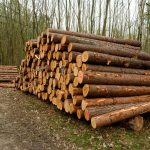
New data shows more than 11.2 million cubic metres of Russian wood was traded into China in 2024, but growing volumes now flowing into the Middle East and Africa.
Russia is redirecting increasing volumes of timber to the Middle East and North Africa (MENA) as traders look to diversify from a lacklustre Chinese market. That is according to new data presented at the 2025 International Softwood Conference, revealing that 1.7 million cubic metres of lumber were shipped to MENA countries in 2024, with 550,000 cubic metres going to Egypt alone.
According to Sanjoy Narayan, of Fastmarkets, Russian lumber production now stands at 28 million cubic metres – down from 32 million cubic metres during the pandemic – with exports falling more than 40% (from a 2019 peak) to just 18.7 million cubic metres last year. “China absorbs about 60% of Russian exports (11.2 million cubic meters in 2024), though these volumes declined by 10% year over year in the first half of 2025 as Chinese market prices remained depressed,” Narayan said. “Notably, Russia still exports sizable quantities to Japan, maintaining a presence in this vital market despite EU sanctions on Russian timber.”
China, Russia, India, Türkiye and Australia are driving a global surge in reforestation, with the “big five” responsible for a sharp rise in forest growing stock. That is according to new data from the UN Food and Agriculture Organisation’s State of the Forest Report 2025, published last month, which reports that global growing stock has climbed from 592 billion cubic metres to 630 billion cubic metres in the 25 years since 2000.
The FAO also tracked long-term shifts in forest production trends. “The area of forest designated primarily for production decreased by 2.70 million hectares per year in 1990–2000 and by 1.49 million hectares per year in 2000–2015, before increasing by 1.97 million hectares per year in 2015–2025,” the report said. “The shift to an increasing trend was driven mainly by Europe and especially the Russian Federation, which reported an annual increase of 4.57 million hectares in 2015–2025.”
A new report published by Australia’s Department of Agriculture under the Freedom of Information Act reveals that 50% of all sampled products could not accurately verify the provenance of the wood. While all known examples of Australian-grown timber were correctly labelled, 63% of import samples carrying private certifications were incorrectly labelled.
This indicates a lack of ability of third-party certification to act as an assurance to support the integrity of a product that is carrying a claim within the consumer market and undermines the credibility of the certification mark itself. These findings indicate importers are likely relying too heavily on third-party certification as a solution to conclude the negligible risk of illegal provenance.
Source Certain identified product groups and origins of particular concern, naming Burmese teak in rough‑sawn form and in composite goods such as doors; Russian plywood and laminated veneer lumber, including birch, larch and pine LVLs; veneers and plywood manufactured in China, notably Bintangor‑faced panels; and composite products from Southeast Asia such as Meranti‑faced marine plywood, doors and mouldings.
Also reported on here: 50% of Australia’s Imported Timber Fails Traceability Testing — Report | Wood Central
Australian supply-chain forensics company Source Certain has analysed more than 3,000 wood samples from the British construction sector. Its tests, which identify timber by analysing unique atomic “fingerprints” created by growing conditions, revealed that over 10% of the samples were not what suppliers claimed. Of those with a false origin, three-quarters were traced back to Russia.
Since Russia’s invasion of Ukraine in 2022, imports of Russian and Belarusian wood products have been banned in the UK and across Europe. But investigators say this has fuelled a black market, with timber relabelled as coming from Estonia and other Baltic states. Because Russian timber plantations are state-owned, smuggling revenues are believed to be contributing directly to the Kremlin’s war effort.

Fire crews are now battling through one of Russia’s most intense forest fire seasons.
The latest fires come weeks after NASA’s Earth Observatory reported that fires in Russia’s Zabaykalsky region near Chita, where satellite images confirmed widespread fires around the city. Local reports stated that fires had reached the city’s outskirts, specifically Chita, a city of 350,000 people situated on the Trans-Siberian Railway.
Slumping Chinese demand has left the country’s timber industry, once worth US$20 billion a year, with nowhere to hide.
Russia’s largest timber companies could face widespread shutdowns as the industry reels from war-time sanctions, declining demand (from China), and a surging ruble. total volumes of timber harvesting down 13% in 2024 compared to 2021 (before Ukraine sanctions), with pulping (down 3%), sawn timber (down 11%) and plywood (23%) amongst the hardest hit.
The Segezha Group, once the world’s second-largest producer of multiwall sack paper and industrial paper sacks, was last year forced to restructure loans amid reduced production volumes, low prices, and higher costs, with the situation worsening due to the surging Ruble (up 22% relative to the US dollar) and hiked up company taxes (up from 20% to 25%)
In addition, companies point to a decrease in demand in the domestic market and the subsequent drop in prices, as well as the difficulties of working in China, where, against the backdrop of the trade war with the United States, activity is declining and stagnation in the construction persists.
Many of the member states that are pushing to water down the EUDR are direct recipients of illegal wood coming from Russia or Belarus through “friendly actors.”
Earthsight’s January 2025 report showed that the EU had imported over €1.5 billion of illegal Russian and Belarusian birch plywood via third countries since sanctions on these products took effect. Their new research shows that the EU has imported a further €273 million of ‘blood-stained birch’ between November 2024 and April 2025, laundered through China, Kazakhstan, Turkey and Georgia.
Repackaged and relabelled by launderers in these third countries and accompanied with fraudulently issued certificates of origin, the goods are often passed off as being made from trees harvested in those third countries, rather than in Russia or Belarus.
All these third countries have low deforestation rates, meaning they would likely be eligible for ‘no-risk’ status under current EUDR country risk category.
Between February and April this year, Spain, which has not requested EUDR exemptions, was the EU’s top importer of suspect birch plywood, with shipments worth over €15 million in estimated retail value, Earthsight found. Portugal followed with more than €12 million, while Estonia imported nearly €10 million worth, mainly from Kazakhstan. However, Poland – the largest importer between 2022 and 2024 – has since significantly stepped up checks, leading to a sharp drop in imports from February this year. Spain’s wood and furniture association has warned that continued Russian imports threaten the domestic industry, echoing similar concerns raised by producers in Latvia and Poland.
Also reported here: The EU’s €273m Sham – Russian Birch Ply Is Still Flooding Europe! | Wood Central
On June 17, 2025, the Government of Canada unveiled a substantial expansion of its sanctions measures against Russia, introducing wide-ranging new import and export prohibitions.
The government introduced a wide range of new restrictions on imports and exports, including a ban on imports of virtually all Russian wood, lumber, timber, paper and paperboard.

Huge volumes of lumber, glulam and other timber products are now crossing Russian borders with Japan remaining one of the few western countries not to hit Putin-aligned producers with sanctions.
More than 71,700 cubic metres of lumber were traded from Russia’s Far East into Japan in April—a 43% increase from last year, making Putin’s Russia Japan’s most important market for lumber imports.
Nearly half of all sampled birch products—used in furniture, kitchen panels, and musical instruments—certified by FSC or PEFC have been misidentified and do not come from the correct country of origin. 44% of the evaluations showed that documentary claims relating to wood fiber species or harvest location were incorrect. 46% of certified products had claims that were incorrect.
High percentages of incorrect claims were found for wood fiber from products with harvest location claims in Ukraine, Poland, Estonia, and Latvia, all of which border sanctioned birch production areas.

A strengthened Ruble, weak import duties and a decline in European demand is a perfect storm – with the peak body for furniture now urging Putin to ramp up import duties to protect the local industry.
Italy and Germany are the leading contributors to the surge entering Russian ports, with export volumes from both countries nearing pre-COVID (and Ukraine war) levels. At the same time, Russian domestic production has dropped by 2%, with the cost of materials and other components—including plywood, MDF, and particleboard—expected to rise by more than 15%.
More than $360 million of Russian birch entered the United States via Indonesia and Vietnam last year.
In 2024, the United States imported over $62 million of birch plywood from Russia,” according to a letter from the American Hardwoods Export Council (AHEC). “However, these direct imports from Russia pale compared to the nearly $200 million of birch plywood imported from Vietnam and the nearly $160 million imported from Indonesia.”

The investigation shows that Russian plywood is being smuggled en masse into numerous EU member states and that efforts by authorities to clamp down have been woefully inadequate. As a result, illegal blood-stained birch worth over 1.5 billion euros has been sold in Europe since sanctions took effect.
Piecing together information from insider leaks, trade documents and clandestine calls, we reveal the actorsThe investigation shows that Russian plywood is being smuggled en masse into numerous EU member states and that efforts by authorities to clamp down have been woefully inadequate. As a result, illegal blood-stained birch worth over 1.5 billion euros has been sold in Europe since sanctions took effect.
Piecing together information from insider leaks, trade documents and clandestine calls, we reveal the actors at every stage of the supply chain – from the manufacturing giants in Russia, through to the firms laundering their products in China, Kazakhstan and Turkey, and their customers in the EU.
at every stage of the supply chain – from the manufacturing giants in Russia, through to the firms laundering their products in China, Kazakhstan and Turkey, and their customers in the EU.
Russian non-commodity, non-energy exports to Vietnam could expand by supplying products from the wood-processing and aluminum industries as well as construction materials, and corresponding requests have been registered by the Russian Export Center (REC) from Vietnamese partners.
Memorandums have been signed on supplying meat products during the Russian delegation’s visit. There is demand for Russian aluminum products, construction materials, ash wood products in large volumes.
More than 90% of Russian lumber is traded to China; now, a new tariff—five times higher than those imposed on the EU—has made importing Chinese furniture parts non-competitive.
As it stands, China is responsible for taking more than 90% of all lumber produced by Russia (accounting for more than 63% of all lumber imported into China every year). Russia’s timber giants are now leaning on Chinese know-how to refurbish huge volumes of plant and equipment.
Billionaire Yevtushenkov’s Segezha Group continues to destroy huge volumes of ancient forests in Karelia as part of a growing trade with China and India.
The Segezha Group, controlled by the family of billionaire Vladimir Yevtushenkov, was, from the 1990s until mid-2022, subject to full FSC certification. This meant that the timber giant agreed to a moratorium to protect millions of hectares of ecologically rich Karelia forests near the Finnish border in exchange for selling timber into “ecologically sensitive” EU markets. “Between June and November 2022, Segezha Group opted out of the logging moratorium in ecologically valuable forests across Russia: from Karelia to Komi, Krasnoyarsk, Irkutsk, and Arkhangelsk,” Vox Europe said last year. “According to World Wildlife Fund, the total forested area Segezha withdrew from protection and is now allowed to log is 1.5 million hectares (3.7 million acres).”
A high-ranking official in the Russian military has been sentenced to 17 years in a high-security jail as part of a major fraud case involving the illegal harvest of timber from protected forests as well as inflated costs of timber materials used in the construction of trenches, bunkers and fortifications on the Ukrainian front line.

Results of the Australia’s Department of Agriculture, Fisheries and Forestry’s (DAFF’s) testing trial on timber species and harvest origins has clearly demonstrated the need for the Albanese Government’s tougher illegal logging laws with some alarming results from the study, Chief Executive Officer of the Australian Forest Products Association, Diana Hallam said today.
The recently completed DAFF trial tested 146 timber products and 39 distinct species using different scientific methods including DNA, stable isotope, trace element, wood fibre and wood anatomy analysis. A quarter of the tested products were found to be inconsistent with declared species, origin, or both. Product testing of laminated veneer lumber (LVL) product showed 80 per cent originating in China and 20 per cent from Russia, with the Russia component not declared.

Russia—until 2022, among the top 3 markets for global plywood production —is now flooding Asia, Latin America, and Africa with an oversupply of cheap wood in response to ‘crippling’ EU sanctions.

Mining is one of the fastest growing causes of deforestation, with a new report published by the World Resources Institue (WRI) revealing that 1.4 million hectares of forests, an area the size of Montenegro, was lost to the extraction of coal, iron and industrial minerals for the 20 years to 2020.Since the turn of the century, mining has increased by 52%. This includes tropical primary rainforests, some of the world’s most important ecosystems where mining is a growing loss driver, and Indigenous and local community territories, where people depend on forests for their livelihoods.
More than 89% of the loss is concentrated in just 11 countries, including Indonesia, Brazil, Russia, the United States, Canada, Peru, Ghana, Suriname, Myanmar, Australia and Guyana.
This article mentions a recent EUTR action whereby Belgian new genetic techniques to identify 260 tonnes of timber imported into Belgium from Russia illegally. Suspecting that Russian timber imports were continuing despite sanctions imposed after Russia’s invasion of Ukraine, researchers analysed samples against a sub-set reference library that related to the twelve nations thought the most likely candidates for the wood’s true origin, including samples taken from Russia. Having identified Russia as the region of origin, authorities were then able to trace the supply chain back through Latvia and Estonia, closing down an illegal import route and a lucrative Russian revenue stream.

Russia’s supply chain is bleeding, with Western sanctions to blame for one of Russia’s largest forestry and paper companies urgently raising funds through the Moscow Stock Exchange— causing its share price to plunge more than 20% in a single day’s trade.
Russia is suffering from high logistics costs, slowing Chinese demand, and increased competition from India, Brazil, and Argentina, forcing mills to cut production volumes.

According to China Customs, China’s imports of softwood logs have contracted 10% for the first six months of 2024 to 15 million cubic metres. In addition, the value of logs has also been in freefall, dropping 17% to $2 billion, from $141.45 per cubic metre to just $130 per cubic metre.
According to data from China Customs, Russia now accounts for 45% of all lumber imports – with Thailand, China’s second-largest importer, now responsible for more than 18% of lumber traded into the world’s largest forest economy.
China’s economic growth has slowed to 4.75%, compared to the rapid annual growth rate of 7% and 8% during the 2010s heyday.

Environmental crimes are destroying the Bolivian Amazon. In 2023, the loss of primary forests in Bolivia increased by 27 percent and reached its highest number on record for the third consecutive year: nearly 500,000 hectares, according to the Global Forest Watch platform.
The Plundered Amazon: The Roots of Environmental Crime in Bolivia, jointly published by InSight Crime and the Brazilian think tank Instituto Igarapé, highlights the transnational and cross-border dynamics of environmental crime in Bolivia, including wildlife trafficking, illegal mercury trafficking for gold mining, and timber trafficking.
Most of the deforestation in the Bolivian Amazon is due to gold mining and widespread land clearing for agribusiness .

The Latvian State Forest Service has fined a company € 10,000 for planning to import birch plywood from Turkey – with the State Forest Service alleging that the timber originates in Russia.

This article summarizes the science behind World Forest ID, but also gives a glimpse at the support provided by Australia, work now being done by IKEA (which used to source extensively from Russia and Belarus), and a recent Belgian investigation into illegally sourced wood imports.
Also reported here: Keeping Sanctioned Russian Timber Out of the EU Is Tricky. This Nonprofit Has a Solution. – WSJ

Dutch authorities have arrested two business owners, who are now accused of smuggling Russian timber into the EU via China.
The arrests were made by the FIOD—the Netherlands’s Fiscal Information and Investigation Service—responsible for investigating financial crimes and comes amid an EU-wide crackdown on conflict timber that continues to circumvent sanctions placed on Russia’s forest supply chain.
In a media release supplied by FIOD, the accused – a man (73) and woman (46) – will be tried under the Netherlands Sanctions Act and the Economic Offences Act – which could lead to a jail sentence.

Vladimir Putin has eased forex requirements on timber, energy, and agricultural exports – with Russia’s Central Bank pointing to a surge in export revenues and sky-high interest rates to help stabilise the rube.
Under the updated government decree, published on May 30, the bar has been lowered to 50% of all trade to be sold in Russian rubles.
It comes after the Russian government, in October, signed a decree to see “the mandatory sale of revenue in foreign currency received by Russian exporters under foreign trade agreements. The decree impacted Russia’s 40 largest exporters in forest products, grain, fuel, energy, black and non-ferrous metallurgy and chemicals.

Russian armed forces have targeted forests in and around the Kharkiv region to export timber and sell into Eurasian markets.
Ukraine’s biggest state enterprise, Forests of Ukraine, is scaling up lumber and raw log production to build new roads and enormous fortifications along Ukraine’s front line.
Russia and Belarus now account for 70% of all Chinese lumber imports.
Russia is ramping up plywood production, with exports to China surging more than 344%, according to new data provided by Roslesinforg – the Russian state-owned customs agency.
The latest numbers come after China Customs reported that exports to China had tripled for March. environmental groups have flagged concerns that China is operating as a broker for Russian and Belarussian timber, with plywood made from Russian birch entering European markets via China, Vietnam and a series of “friendly countries” across Eurasia.

In July 2022, the European Union responded to the war in Ukraine by banning the import of Russian woody biomass used to make energy. At roughly the same time, South Korea drastically upped its Russian woody biomass imports, becoming the sole official importer of Russian wood pellets for industrial energy use.
The EU has reportedly replaced its Russian supplies of woody biomass by importing wood pellets from the U.S. and Eastern Europe. But others say that trade data and paper trails indicate a violation of the EU ban, with laundered Russian wood pellets possibly flowing through Turkey, Kazakhstan and Kyrgyzstan to multiple EU nations.
EU pellet imports from Turkey grew from 2,200 tons monthly last spring to 16,000 tons in September. Imports from Kazakhstan and Kyrgyzstan reportedly rose too, even though neither has a forest industry. A large body of scientific evidence shows that woody biomass adds significantly to climate change and biodiversity loss.
Enviva, the world’s largest woody biomass producer, which operates chiefly in the Southeast U.S., may be the big winner in the Russian biomass ban. Since the war began, Enviva has upped EU shipments, and also announced a 10-year contract with an unnamed European customer to deliver 800,000 metric tons of pellets annually by 2027.
Wood Central reports that, for April 2024, South Korean imports of Russian wood pallets jumped 27%, with more than 200,000 cubic tonnes traded from Moscow to Soel from January to April alone. 85% of Russia’s Logs Are Sent to China—Where Do They End Up? | Wood Central

Until early 2022, Australian timber importers relied on Russia for 40% to 50% of all LVL, formwork and beams entering the Australian building and construction supply chains.
However, that changed in mid-2022 when the European Union banned Russian and Belarusian timber exports, whilst PEFC and FSC suspended certification schemes in both countries. And whilst Australia opted to slap a 35% tariff on Russian timber rather than following the lead of the EU and the UK in introducing a total ban, FSC and PEFC deemed that all products coming from Russia and Belarus (irrespective of secondary ports) are conflict timber, and therefore, cannot be used in PEFC and FSC claims.
According to the Australia’s EWPAA, “signs of non-conforming LVL include missing branding details, questionable certification, and a lack of acceptable documentation.”

Until early 2022, timber importers relied on Russia for 40% to 50% of all LVL, formwork and beams entering the Australian building and construction supply chains. However, that changed in mid-2022 when the European Union banned Russian and Belarusian timber exports, whilst PEFC and FSC suspended certification schemes in both countries. And whilst Australia opted to slap a 35% tariff on Russian timber rather than following the lead of the EU and the UK in introducing a total ban, FSC and PEFC deemed that all products coming from Russia and Belarus (irrespective of secondary ports) are conflict timber, and therefore, cannot be used in PEFC and FSC claims. In 2022, the publisher of Wood Central exclusively revealed that record shipments of Russian LVL were entering Australian ports via China following Putin’s invasion of Ukraine.

Lumber exports from the EU’s largest timber economies are in decline, thanks to a shortage in biomass in the Baltic states. However, with the roll out of the Green New Deal there are concerns that European countries will not be able to balance increased harvesting with climate commitments.
An investigation by the European Commission has confirmed the circumvention of anti-dumping duties by firms buying plywood from Turkey and Kazakhstan. The investigation found evidence of laundering of finished Russian plywood – a breach of EU sanctions put in place following the Ukraine invasion.
Inspectors also confirmed Turkish and Kazakh firms are using Russian raw materials to make birch ply for sale in Europe. The European Commission investigation found evidence of plywood made in Russia being simply laundered and re-labelled as of Kazakh or Turkish origin, something which should be of interest to authorities tasked with enforcing EU sanctions, both at EU and Member State level. Though not covered by sanctions, these sales are in clear breach of the EU Timber Regulation (EUTR), a law meant to halt illegal wood use in Europe.
Today Earthsight, which submitted evidence to the EU’s investigation, has filed EUTR complaints pertaining to 31 firms across nine member states whose suppliers were confirmed by the EU to be using Russian raw materials.
Almost 30% of Ukraine’s total forest area has been destroyed by conflict, with Russian armed forces logging Ukrainian forests and selling timber into global markets via “friendly countries.”
Russia is now facing a growing gap between timber production and log supply, with production growing 5% in 2024, while commercial logging of Russian forests has nose-dived 26%.
That is according to Lesprom’s “Russian Lumber Industry Insights,” which reports that Russian sawmills are now bleeding thanks to a critical shortage in raw materials and are struggling to meet rising demand from major export markets.
The problem for Russia is that Western Companies—which provided much of the foreign direct investment needed to modernise logging operations in the decades leading up to the 2022 war—have now exited the country on mass, creating large gaps in the Russian supply chain.
Poland is the new gateway for Belarussian timber, with the import of timbers (via Kazakhstan) surging. A joint investigation involving the Belarussian Investigative Center, Radio Free Europe, and Polish newspaper Gazeta Wyborcza alleges that Polish imports of timber from the largely deforested Kazakhastan grew from €14 million (pre-war) to more than €68 million last year as part of a €126 million global trade in conflict timber.
Also featured in Belarus evading EU sanctions by importing timber to Poland with false documents, finds investigation | Notes From Poland and Fraud Exposed: Poland Now EU’s Ground Zero for Conflict Timber | Wood Central
Sanctioned Russian birch plywood worth an estimated €40 million has been seized at Rostock Port in Germany. The ship was en route to the United States, but stopped in Germany for an emergency. The Canadian-owned shipping firm argue that the vessel’s cargo should be exempt, because it only docked in Germany due to an emergency. German Customs have rejected that argument. The wood may be linked to a Russian timber giant Sveza, which is part-owned by Alexei Mordashov, Russia’s richest man and a subject of EU and US sanctions.
Also reported here:
€40M of Conflict Timber Seized: How the US $2B Log Trade Fuels War | Wood Central
There is an import ban on Russian timber. In fact, EU sanctions are being circumvented on a large scale. Chinese companies play a key role, as frontal reveals.

Scientists are using state-of-the-art tech to correctly trace the flow of timbers entering the EU from Russia and Belarus and have developed a new framework that policymakers can use to eliminate conflict timber worldwide.
Developing the world’s largest reference database for Eastern European timber species (Betula, Fagus, Pinus, Quercus) tailored to sanctioned products; scientists can correctly predict, with 82% accuracy, “false claims” coming from Russia as well as harvest locations “within 180 to 230 km of the actual location.”
The European Commission has disclosed the findings of its anti-circumvention investigation into illegal imports of Russian birch plywood. The findings disclosed to relevant stakeholders show evidence that Russian birch plywood is being imported into the EU market through Kazakhstan and Türkiye to avoid paying anti-dumping duties. As Russian wood products are also subject to sanctions in the EU, the results of this investigation are expected to lead to further action by national authorities and the European Anti-Fraud Office (OLAF).
A cross-border probe, led by ICIJ and first published in March 2023, involved 44 media partners globally and documented how Western environmental auditing firms and governments failed to stop the trade of wood logged in conflict zones.
The findings supported a June investigation from ICIJ partners Paper Trail Media, Der Spiegel, ZDF and others that similarly revealed how Russian timber continued to circumvent the EU’s embargo, making its way into the bloc by routing through countries like China, Turkey, Kazakhstan and Kyrgyzstan.
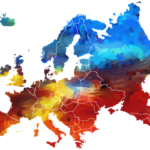
When Russia invaded Ukraine in February 2022, sanctions swiftly followed, including a total ban on Russian timber imports into the European Union (EU) from July 2022. Belgium, one of the staunched supports of the EU ban, has become a profitable destination for Russian wood. Using a forensic laboratory at the Royal Museum for Central Africa in Tervuren, inspectors determined that several wood shipments from Russia had arrived in Belgium. The number of fines imposed for illegal harvests almost tripled in 2023.
“But an impediment is a distinct lack of inspectors,” Wynant said. “There are now fewer than five timber inspectors working full-time in Belgium, but there are 4500 timber importers,”according to the article .
The Ukrainian Embassy Malaysia reported on the ecological damage to Ukrainian forests. One-third of the countries forests are damaged, and illegal logging is rampant in national parks and reserves in areas occupied by Russian forces.
The United States and Australia have some of the softest compliance actions against Russian wood in the Western World, with the Biden administration opting not to follow the UK, EU and more than 130 global ENGOs in introducing a sanction on all timber imports after the Ukrainian Parliament asked all “friendly countries to sanction Russian timber.
It includes FSC and PEFC – the world’s largest private forest certification labels – which cancelled Russian and Belarussian certificates.
Since March 2022, more than US $1.98 billion worth of timber has been imported from Russia.

Timber trade from Belarus has increased six times since the start of the Ukraine conflict amid fears that Azerbaijan is being used to bypass sanctions. Since early 2022, western sanctions on Russian and Belarussian trade have limited the export of pulp, paper and softwood to nine countries – China, Kazakhstan, Belarus, Uzbekistan, Iran, Kyrgyzstan and the United Arab Emirates and Azerbaijan
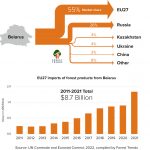
Russia and Belarus are ramping up timber exports to Uzbekistan amid fears the former soviet state could act as a new trading post for conflict timber entering global timber supply chains.
It comes as Uzbekistan is spending billions on new rail, road and sea infrastructure, funded by China’s Belt and Road Initiative, forging new pathways for timber to infiltrate global supply chains.
Already, Uzbekistan is Russia’s second-largest importer of softwoods, with 480,000 cubic metres of timber (or 11% of its total imports) imported into the country every quarter – in what is a significant escalation in trade since the start of the Russian invasion of Ukraine.
It comes as Wood Central reported in July that a block of ten countries – including Uzbekistan as well as China, Kazakhstan, Belarus, Iran, Kyrgyzstan, the United Arab Emirates, Azerbaijan, and Tajikistan – is fueling a booming trade of conflict timber bypassing western sanctions.

Vanuatu forest authorities last week banned Vanuatu Forest Industry Ltd (VFIL) from exporting logs while they investigate landowners’ complaints that trees were cleared without permission on the island of Santo. The export of round logs is banned in Vanuatu, although a government inquiry in 2021 found endangered rosewood being illegally exported to China, where it is prized for furniture.
While this article is mainly about the closure of a sawmill in New Zealand, it notes the large amounts of engineered wood products from China into New Zealand, the rapid expansion of laminated veneer lumber (LVL) plants in China, and the likelihoods that the Chinese imports “likely also include logs from Russia processed into LVL in a ‘back-door diplomacy’ arrangement by the two countries.”
While this article is mainly about the closure of a sawmill in New Zealand, it notes the large amounts of engineered wood products from China into New Zealand, the rapid expansion of laminated veneer lumber (LVL) plants in China, and the likelihoods that the Chinese imports “likely also include logs from Russia processed into LVL in a ‘back-door diplomacy’ arrangement by the two countries.”

Since Russia invaded Ukraine, the country’s relationship with China took on even greater significance. More than 83% of Russia’s timber export goes through Chinese supply chains, with China now Russia’s distribution point to global forest markets.
Chinese shipping companies like the Shandong Port Group play a crucial role in Russia realising its Arctic transport aspirations. The company includes four major seaports in the Chinese Shandong region and are looking for more.
Komi Governor Vladimir Uiba – who has strong ties to the failed Wagner group – is pushing to attract Chinese investment in forest processing. Komi is Russia’s second-largest state and is home to the Virgin Komi Forests – a UNESCO World Heritage Site and the largest virgin forest in Europe.
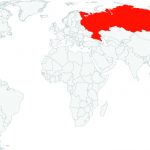
The European Commission is investigating potential illegal imports of Russian birch plywood products into the European Union. CELEX:32023R1649:EN:TXT.pdf (europa.eu) There has been a significant increase in imports of Russian birch plywood into Turkey and possibly Kazakhstan, and an increase in exports of birch plywood from both countries to the EU—although neither has been a significant producer of birch plywood in the past. The EU banned Russian wood after Russia invaded Ukraine.
ICIJ partners in Europe revealed the indirect trade routes used to mask the origins of Russian timber, which continues to flow into the EU despite being banned.
Paper Trail Media, Der Spiegel, ZDF and others analyzed trade data to trace the pathway of banned wood through third countries, including China, Turkey, Kazakhstan and Kyrgyzstan.
Russian mercenaries with close ties to President Vladimir Putin and a logging contractor exposed for funding African rebels help feed a barely-regulated European timber rush in one of the world’s poorest and most fragile countries, according to a new report by Earthsight.
New evidence shows that an obscure company reportedly controlled by the Russian Wagner paramilitary group supplied timber to European consumers. The trade embroils a firm listed on London’s AIM stock exchange that was part of a national delegation at the COP26 UN climate summit in Glasgow.
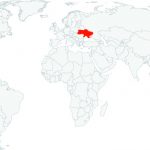
Before Russia’s invasion of Ukraine in February 2022, about 80% of all birch plywood globally was produced in Russia, Belarus and Ukraine.
After the fifth package of sanctions imposed on Russia by the EU finally entered into force in July 2022, the import of roundwood and wood products, including birch plywood, from Russia to the EU was banned. However, according to information and statistics obtained from the market, it seems that illegal Russian birch plywood continues to be imported to Europe from third countries.
This is reflected in increased imports of birch plywood from countries such as Kazakhstan and Turkey. Considering the production capacity of Kazakhstan, we can see that the country does not have sufficient birch plywood production to be able to deliver the volumes recorded in the statistics.
Illegal birch plywood travels to the European markets in many ways. The import ban is evaded by transit through a third country, for example. The third countries may also make minor changes to the plywood, after which the country where the changes were made is reported as the products’ country of origin. Another way is to use a false tariff heading so that the product is excluded from sanctions.
Russia has been accused of engaging in industrial-scale logging in Ukraine, cutting down large swaths of trees for sale and to strengthen its defensive positions. In a letter to President Putin, Russian Defense Minister Shoigu requested permission to harvest timber and stated that “wood not used for defense will be sold to finance the military operation.”
The EU first imposed trade sanctions on Belarus timber products on 2 March 2022. These were extended to Russian timber products on 8 April 2022. On 10 March 2022, Russia’s Industry and Trade Ministry announced a ban on all wood and timber-related exports to “unfriendly countries”, including the EU, UK and US. Both leading certification organisations, the PEFC and FSC, announced in March 2022 that all timber originating from Russia and Belarus would be categorised as ‘conflict timber’ (i.e. from a controversial source) and not eligible to be sold and promoted as PEFC- or FSC-certified. This had a significant impact on many European companies which had become heavily dependent on Russia and Belarus for their supplies of certified wood.
The EU first imposed trade sanctions on Belarus timber products on 2 March 2022. These were extended to Russian timber products on 8 April 2022. On 10 March 2022, Russia’s Industry and Trade Ministry announced a ban on all wood and timber-related exports to “unfriendly countries”, including the EU, UK and US. Both leading certification organisations, the PEFC and FSC, announced in March 2022 that all timber originating from Russia and Belarus would be categorised as ‘conflict timber’ (i.e. from a controversial source) and not eligible to be sold and promoted as PEFC- or FSC-certified. This had a significant impact on many European companies which had become heavily dependent on Russia and Belarus for their supplies of certified wood.
EU27 import value of wood and wood furniture from China increased only 4% to US$6.0 billion in 2022, although this did build on a massive 42% gain the previous year. Import value from Ukraine also increased by 9% to US$1.9 billion in 2022, despite the serious disruption due to the war, following a 55% gain the previous year. Other significant beneficiaries were Turkey, for which EU27 import value increased 32% to US$890 million last year, and non-tropical products from Brazil which recorded a 54% increase to US$ 690 million in 2022

On the anniversary of Russia’s invasion of Ukraine last week, G7 countries announced new sanctions on Russia and Belarus.
This new Earthsight article shows that since the conflict began, the USA, Canada, Japan, the EU and the UK have imported timber and wood products worth over $2.9 billion from Russia and Belarus.
Though the EU and UK have sanctions in place on most wood products, they omit some key products. Meanwhile Japan, the US and Canada have not put into place any ban on wood products from Russia and Belarus.
Earthsight’s latest report revealed that over $1.2 billion of Russian plywood has been sold in the US since the conflict began, with profits funneling directly to Putin’s allies, and possibly helping to fund Russia’s military.
*******************
The article is a useful summary of the existing sanctions put into place on Russian and Belarus timber products.

Not long after imposing sanctions on wood imports from Russia and Belarus, Europe saw an influx of wood supposedly coming from Kazakhstan and Kyrgyzstan. Authorities say sanctions-busters are increasingly mislabeling wood as Central Asian so they can keep bringing it in to the EU.
Key findings:
Traders are evading European Union sanctions on Russian and Belarussian wood by declaring that it really comes from Central Asia.
Customs in Lithuania and Latvia are scrambling to keep up with the sudden influx of timber with suspect paperwork from Kazakhstan or Kyrgyzstan.
Reporters found several Kyrgyz and Belarusian companies that offered false paperwork so traders could ship banned Belarusian wood to the EU.

HO CHI MINH CITY, Vietnam — Russian birch wood has continued to flow to American consumers, disguised as Asian products, despite U.S. economic sanctions imposed on Russia over its invasion of Ukraine, a new report says.

A recent report by European Investigative Collaborations (EIC), a transnational investigative journalism project, claims that the Wagner Group, a Russian paramilitary group with close links to the regime of Vladimir Putin and active in the Ukraine war, is engaged in the forestry business in the Central African Republic (CAR).
The report Bois Rouge was conducted in collaboration with All Eyes on Wagner, an open-source investigative project by French NGO OpenFacto that tracks Wagner’s global influence.
Wagner, which is reputed to be run by Yevgeny Prigozhin, a Russian oligarch and close confidante of Russian President Vladimir Putin, has long been reported to offer private security services to African partners – among them the CAR, Mali, and Sudan – in return for exclusive rights to gold and diamond mining in strategic areas.
However, All Eyes on Wagner says that Wagner’s interests also extend to the forestry trade in the CAR.

Timber Trade Federation (TTF) issued import warning for TTF-members on birch plywood from the Far East.
“It has been nearly six months since Russia’s awful invasion of Ukraine, with few signs the conflict is going to abate anytime soon.
Though grain exports began to leave Ukraine this week for the first time since the war began, international sanctions on Russia remain very much in place.
Along with maritime sanctions and restrictions on Russian payments, the most significant sanction for our industry is the Russian timber import ban.

An investigation reveals evidence linking the Wagner group, a group of Russian mercenaries, with a timber concession in the Central African Republic

A group of smugglers Xin Xueming and Olga Lovochkina exported to China a forest larger than the area of the Trans-Baikal village of Ivan-Ozero in the Chita region. The materials of the criminal case report that the organized crime group illegally exported abroad a total of 340.7 thousand cubic meters of timber worth 2,677,174,712 rubles.
On June 29, the Chernovsky District Court sentenced Xin Xueming to 9 years in prison and a fine of 6 million rubles. Earlier, his wife Olga Lovochkina was found guilty in this case – she was sentenced to 7 years in prison, but with a delay of 14 years due to pregnancy.
At the trial, the prosecutor said that the “best entrepreneur of Transbaikalia” Olga Lyovochkina was responsible for the accounting of the criminal group, and her husband Xing Xuemin planned the work of the organized crime group and selected new members for it. According to the prosecution, 20 people worked as part of the “organization” as part of 3 groups – to legalize illegally exported timber and the money received from its sale, to harvest timber and send it to the PRC and to cover up the organized crime group in “cooperation” with the authorities.
According to the investigation, the members of the organized crime group for seven years – from 2012 to 2019 – exported wood illegally mined in Buryatia and Transbaikalia to China using forged documents. To do this, they created nominal companies, on behalf of which they presented documents to the Chita customs for declaring and transporting timber to the PRC. The total volume of smuggling exceeded 360 thousand cubic meters of timber worth more than 2.6 billion rubles.
- The Trans-Baikal Territory ranks third in Russia in terms of illegal logging. In 2020, it amounted to 60.7 thousand cubic meters of forest. In the first position is the Irkutsk region with 415 thousand cubic meters, in the second is the Krasnoyarsk Territory (242 thousand).

Timber chiefs have warned that imports of the material from Russia or Belarus could now be deemed illegal in the UK. The Timber Trade Federation (TTF) told its members that purchases from suppliers in the ostracised nations could fall foul of regulations initially coming into force nine years ago in part to tackle illegal logging abroad.
FSC and PEFC have barred wood and timber from Russia and Belarus from their certified products, as a host of other industry suppliers go public with their stance against Russia’s war in Ukraine.
Deforestation accounts for at least 15% of all greenhouse gas emissions.
Illegal deforestation, done too quickly for forests to regrow naturally, still takes place in Europe, especially in Eastern European countries. Products manufactured from illegally logged wood have made their way on the market in the UK.
Ikea is likely to have sold children’s furniture for years made from wood linked to illegal logging in Russia, where rampant tree-cutting threatens forests crucial for the planet’s climate, according to a new report by a nonprofit environmental group.
Sanctions breakdown as Belarussian timber exports surge 8-fold for the first three months of 2024.
Timber exports from the heavily sanctioned Putin-aligned state have exploded over the past 12 months, with more than 365,000 cubic metres of sawn wood traded into 15 “friendly nations” in the first three months of 2024 alone.
That is according to the government-backed Belarusian Universal Commodity Exchange (BUCE), which reported that Belarus timber production was up eight times over the January to March quarter for 2023, with the total output of Belarussian timber reaching 748,000 cubic metres— including 49% traded into global markets via third-party Eurasian trading ports.
 Key Resources

 Methodology
 Data Tools
Click here to access the Global Illegal Logging and Associated Trade (ILAT) Risk assessment tool and to download the Forest Trends User Guide describing the functionality of the ILAT Risk Data Tool.
Click here to access the Cattle Data Tool.
 Export Restrictions
 Trending