
 Back to Home Page


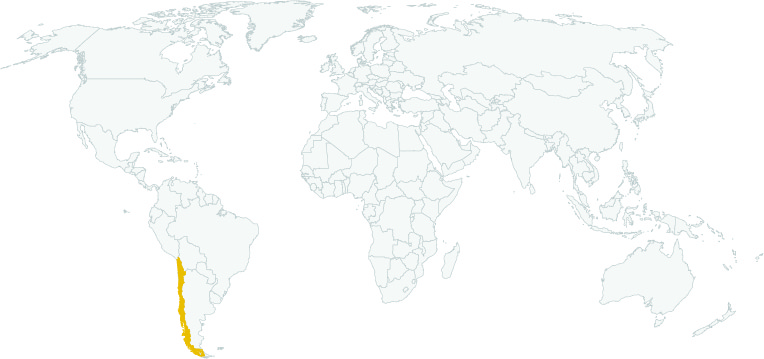

Brazil’s Federal Police found no trace of cocaine in Bolivian fence posts tipped to hold up to 50 tonnes, with a second laboratory confirming the result.
Seized timber is more likely to have brushed against cocaine than be used to smuggle it, with dense tropical hardwoods such as ipe and cumaru “very complex to impregnate”. That is according to an expert in South American timber trading, who wrote to Wood Central after its extensive report on how police on three continents found drug networks moving cocaine inside timber planks and plywood.
Brazil’s customs service, the Receita Federal, had stopped 260 tonnes of Bolivian hardwood at the frontier towns of Corumbá and Cáceres under Operation Timber Shield. The agency estimated the loads could hide 20 to 50 tonnes of liquid cocaine, in what it called the same scheme Chile uncovered earlier that month.
Chilean prosecutors say traffickers behind that seizure dried Bolivian timber in extreme heat, then forced drugs into its fibres under vacuum and pressure. The wood was tajibo and almendrillo, the Bolivian names for ipe and cumaru.
Ireland has become the latest country to find cocaine hidden in timber this year, following seizures in Australia, Chile, and Spain, where investigators exposed networks moving the drug inside wood. It comes as the European Union Drugs Agency counted 42 cocaine processing sites dismantled across six member states in 2024, up from 34 a year earlier.
The Regional Prosecutor of Arica and Parinacota traced the cargo to 15 legally constituted timber companies in Bolivia, whose loads were bound for markets from Germany and Belgium to New Zealand.
Chile’s National Customs Service called the 1,080 tonnes of drug-laced wood the largest seizure in the country’s history when it disclosed the find in June. Reporters who accessed prosecutorial sources in Chile and Bolivia traced so-called narco-timber back at least 20 years and found Pando, on Bolivia’s border with Brazil, was the most common origin of the 32 shipments. Chilean prosecutors say the groups chose the country as a transit route because of its Pacific ports, and that the shipments moved between January and April.
Both hardwoods in the Chilean packs, known in Bolivia as tajibo and almendrillo, sell into decking markets as ipe and cumaru under CITES Appendix II controls. Receita Federal says the CITES checks that let it stop 75 tonnes of illegally cut ipe at the northeastern port of Pecém in 2025 grew directly out of its experience with earlier seizures. It also stopped 156 kilograms of cocaine hidden in wood from leaving the southern port of Paranaguá for Australia in May last year.
Detectives and customs officers in Ireland have seized 74 kilograms of cocaine soaked into plywood sheets shipped from Colombia.
“Forensic Science Ireland identified the extraction method and the value of the 74 kg of cocaine was estimated at €5.2 million,” Revenue said. The two agencies had been targeting a criminal organisation suspected of importing cocaine “camouflaged within consignments of wood being shipped from Colombia” and distributing cannabis.
In July, Garda sources told security and crime editor Conor Lally that the plywood had been drenched in liquid cocaine overseas and ground into sawdust with workshop machinery once it reached Ireland.
A US White House report identified more than 40 jurisdictions, including the EU, Canada, Japan, and Brazil, as associated with a higher risk for illegal transshipments.
This report identifies more than 40 countries associated with elevated illegal transshipment risk. These jurisdictions vary significantly in economic scale and function. Some are major trading partners with diversified industrial bases and large volumes of overall commerce. Others are closely integrated into China-linked production and supply networks. A third group consists of smaller jurisdictions that offer specific advantages, including low labor costs, permissive free-zone rules, strategic port access, bonded warehousing, limited customs capacity, niche assembly operations, or preferential access to the U.S. market.

Twenty-one Pacific Rim economies have signed a joint pledge to intensify the fight against illegal timber, with forestry ministers closing two days of talks in Shenzhen on commitments running from enforcement to wood in construction. That is according to the joint statement issued through APEC after the sixth Ministerial Meeting on Forestry, the first ecological ministerial China has hosted in 15 years.
Chilean authorities seized 1,080.8 tonnes of timber chemically impregnated with cocaine, ketamine, and other narcotic substances, making it the country’s largest drug seizure to date. The investigation found that the wood itself had been infused with drugs, allowing traffickers to conceal narcotics within a legitimate timber shipment rather than simply hiding them inside containers. The contaminated timber originated in Bolivia and was intercepted at the Chilean ports of Arica, Valparaíso, and San Antonio following a six-month investigation. Authorities estimate the shipment contained approximately 108 tonnes of narcotics, with an estimated European street value exceeding US$8.3 billion. The intended destinations included Germany, Belgium, France, the Czech Republic, Spain, Portugal, Italy, the United Kingdom, the United States, Mexico, Morocco, Panama, Mauritius, New Zealand, and the Dominican Republic. The case demonstrates how legitimate timber supply chains can be exploited by sophisticated transnational criminal networks using advanced chemical concealment techniques. It also highlights the need for stronger customs intelligence, supply chain due diligence, and international cooperation to identify high-risk timber shipments used for trafficking illicit goods.
Also covered in English here: Drugs Hidden in Timber Behind Chile’s Record Seizure | Wood Central
Criminal gangs are increasingly infiltrating legitimate business sectors such as trade, and importing more illegal products into the Netherlands, police research bureau Politie & Wetenschap has warned in its latest report.
The researchers found that the trade in avocados, plastic waste and timber are particularly prone to criminal infiltration and gangs earn money by circumventing local and international rules and regulations.
Parts of the avocado trade in Mexico, Peru, Colombia and Chile are also being taken over by gangs, the report said. Extortion, theft from local avocado farmers, and illegal slash and burn practices to obtain more land to grow avocados are rife.

When Russia invaded Ukraine in February 2022, sanctions swiftly followed, including a total ban on Russian timber imports into the European Union (EU) from July 2022. Belgium, one of the staunched supports of the EU ban, has become a profitable destination for Russian wood. Using a forensic laboratory at the Royal Museum for Central Africa in Tervuren, inspectors determined that several wood shipments from Russia had arrived in Belgium. The number of fines imposed for illegal harvests almost tripled in 2023.
“But an impediment is a distinct lack of inspectors,” Wynant said. “There are now fewer than five timber inspectors working full-time in Belgium, but there are 4500 timber importers,”according to the article .

The Development Bank of Latin America and the Caribbean (CAF) has announced an investment of US$25 million in Timberland Investment Group’s (TIG) reforestation strategy in Latin America. TIG, a subsidiary of BTG Pactual, aims to protect and restore around 150,000 hectares of deforested natural forests in Brazil, Uruguay and Chile. The initiative also aims to create sustainable and independently certified commercial forests to improve biodiversity and support inclusive community development. In line with its mission to boost sustainable development, CAF aims to become the region’s green bank committing to allocate US$25 billion in green financing by 2026 representing an increase from 24% to 40% of total approvals.
The revelations mirror Deforestation Inc. findings from around the world, which showed how auditing firms hired as environmental verifiers often ignore or fail to identify serious transgressions by their clients.
Audit firms in Finland, Indonesia, Chile, India, and Germany are also mentioned.

According to the World Bank, illegal logging in Chile’s native forests destroyed 11,368 hectares of land between 2013 and 2019 and generated 1.2 million m3 of illegally harvested timber – causing deforestation, loss of biodiversity, environmental degradation, and increasing violence. The southern regions of the country, such as La Araucanía and Biobío, are among those most affected by illegal logging activities. In May 2022, the government declared a state of emergency in the region of La Araucanía and in the provinces of Arauco and Biobío within the Biobío region.
This article will address illicit activities in Chile’s timber sector and identify associated financial risks. Ultimately, the article will discuss the current regulatory measures to combat illicit financial flows (IFF) stemming from environmental crimes.

Some 60 percent of the world’s lithium reserves can be found in the so-called lithium triangle, a region that encompasses Chile, Argentina, and Bolivia. It’s not just lithium either: Peru and Chile are the world’s two largest copper producers, while Brazil is home to 17 percent of all nickel reserves.
That has sparked a global scramble to tap the region’s wealth—one in which Chinese companies have an edge. Beyond lithium, Beijing has also struck deals for solar, wind, and hydroelectric projects across the region, pouring hundreds of millions of dollars into solar parks in Argentina and Brazil as well as signing contracts for hydroelectric projects in Bolivia and Argentina.
Part of the allure of partnering with Beijing, experts say, is the very nature of Chinese deals. China has boasted about its no-strings-attached financing, with fewer economic and political conditions than Western lenders. “[Governments] know that they’re not going to get the same level of quality by partnering with Chinese companies, but they also will get fewer headaches, fewer regulations, fewer lessons on the environment, fewer complaints from [nongovernmental organizations],” Berg said.
The Zoological Society of London (ZSL), which, in its 2025 SPOTT assessment of 100 major forestry firms, reports that only 18% disclose the countries from which they source, and a mere 4% can trace their supply chains down to the forest management unit (FMU) level. At the same time, Wood Central understands that none of the companies assessed publish georeferenced maps for all third-party FMUs, and just 3% report what share of their supply is verified deforestation-free.
SPOTT assesses 100 timber and pulp producers, processors and traders on their public disclosure regarding their organisation, policies and practices related to environmental, social and governance (ESG) issues. Each company receives a percentage score to benchmark their progress over time. See further explanation of assessment scores here.
 Key Resources

 Methodology
 Data Tools
Click here to access the Global Illegal Logging and Associated Trade (ILAT) Risk assessment tool and to download the Forest Trends User Guide describing the functionality of the ILAT Risk Data Tool.
Click here to access the Cattle Data Tool.
 Export Restrictions
 Trending