 Back to Home Page


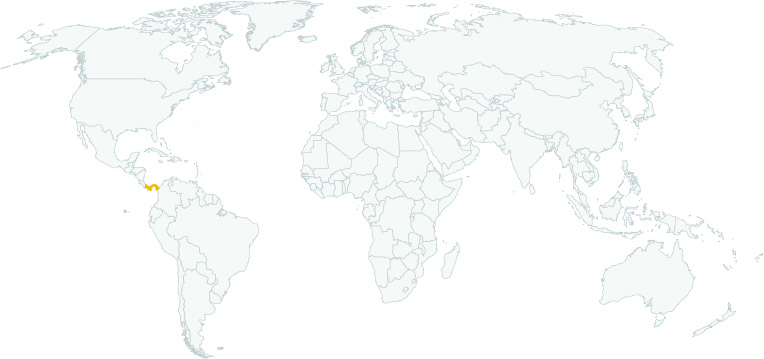
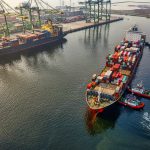
A US White House report identified more than 40 jurisdictions, including the EU, Canada, Japan, and Brazil, as associated with a higher risk for illegal transshipments.
This report identifies more than 40 countries associated with elevated illegal transshipment risk. These jurisdictions vary significantly in economic scale and function. Some are major trading partners with diversified industrial bases and large volumes of overall commerce. Others are closely integrated into China-linked production and supply networks. A third group consists of smaller jurisdictions that offer specific advantages, including low labor costs, permissive free-zone rules, strategic port access, bonded warehousing, limited customs capacity, niche assembly operations, or preferential access to the U.S. market.
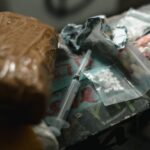
Chilean authorities seized 1,080.8 tonnes of timber chemically impregnated with cocaine, ketamine, and other narcotic substances, making it the country’s largest drug seizure to date. The investigation found that the wood itself had been infused with drugs, allowing traffickers to conceal narcotics within a legitimate timber shipment rather than simply hiding them inside containers. The contaminated timber originated in Bolivia and was intercepted at the Chilean ports of Arica, Valparaíso, and San Antonio following a six-month investigation. Authorities estimate the shipment contained approximately 108 tonnes of narcotics, with an estimated European street value exceeding US$8.3 billion. The intended destinations included Germany, Belgium, France, the Czech Republic, Spain, Portugal, Italy, the United Kingdom, the United States, Mexico, Morocco, Panama, Mauritius, New Zealand, and the Dominican Republic. The case demonstrates how legitimate timber supply chains can be exploited by sophisticated transnational criminal networks using advanced chemical concealment techniques. It also highlights the need for stronger customs intelligence, supply chain due diligence, and international cooperation to identify high-risk timber shipments used for trafficking illicit goods.
Also covered in English here: Drugs Hidden in Timber Behind Chile’s Record Seizure | Wood Central
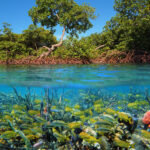
Once synonymous with lawlessness and unchecked migration, biologically rich frontier of the Darien is now the focus of an ambitious conservation push by Panama’s government.
Since President José Mulino took office last July, Panama has poured resources into the region. The Ministry of Environment, in partnership with NGOs like Global Conservation, has trained and deployed 30 new guards to Darién National Park, increasing the total to 52. Equipped with Starlink satellite communications, smartphones and GPS mapping tools, the rangers now cover more terrain than ever before.
These steps are part of a broader campaign to regain control over a region long shaped by external pressures: migration, illegal logging, gold mining, and land grabbing for agriculture. This year alone, two major raids by SENAFRONT, a militarized police unit, dismantled illegal gold mining camps that had generated millions in profits while polluting waterways with mercury and phosphorus.
Meanwhile, efforts to regulate logging are showing signs of traction. A moratorium on new timber permits, extended through 2029, has silenced many sawmills in the province.
Panama is pouring new resources into protecting Darién, a remote province where the rugged, nearly impenetrable jungle provides cover for migrants, drug traffickers, illegal loggers, miners and cattle ranchers.
Dozens of park guards have been hired and trained with new technology, and officials are working on implementing stricter regulations for logging and agribusiness.
New roads and bridges will bring investment, access to education and health care to hard-to-reach communities, but they could also attract an influx of people ready to cut down the forest.
As more people arrive to the region, the agricultural frontier pushes closer to the limits of the park, raising concerns among rangers about how they will defend it in years to come.
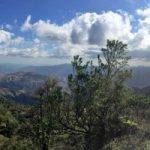
Migration through the Darien Gap — a remote area along the Colombia-Panama that sat largely untouched until it became the epicenter of 2021’s crush of migration — has virtually vanished, but families in the small community of Villa Caleta still fear bathing in the winding river. Fish, their main food source, reek of fuel from boats that carried people down the Turquesa. And deeper in the jungle, criminal groups that pushed into the region to profit off the migratory route are part of illegal gold mining and deforestation operations.

FSC and Assurance Services International (ASI) announce the launch of the Teak Corridor transaction verification (TV) loop. FSC and ASI have conducted TV loops on FSC-certified high-value timber species like teak (Tectona grandis) in the past. The previous teak TV loop, along with other available information, indicate the possibility of integrity risks in the segregation of FSC-certified and non-certified teak in the supply chains.
Therefore, FSC recommends certificate holders with teak in their certification scope to apply additional due diligence in selecting their teak suppliers and following FSC rules to ensure that the teak products they purchase are legitimate and within the FSC certificate scope of the seller.

According to Global Canopy, US$6.1 trillion in funding was provided to the 350 companies with the greatest risk exposures to tropical deforestation by some 150 financial institutions in 2023.
Through this exposure, land conversion presents numerous supply-chain risks to firms, namely:
- The reputational risks posed by adverse media (exacerbated further if linked to any human-rights abuses in the context of land conversion).
- The legal risks represented by increasing regulatory and legislative pressures on companies and financial institutions to prevent deforestation.
- The physical risks present, given that most bank-financed businesses and commercial services ultimately depend on natural capital and resources directly or through their supply chains. Aggressive consumption of resources reduces their availability in the long term, undermining sustainable development and creating economic instability. Indeed, the World Economic Forum (WEF) has estimated that at least 50 percent of global GDP is reliant on nature and warned that the impacts of climate change would significantly destabilise global trade.
With help from U.S. organizations, Panama’s Indigenous people are using satellite images and other technologies to identify illegal logging and incursions by ranchers on their territory. But spotting the violations is the easy part — getting the government to act is far harder.
Recent seizures of illegally sourced wood in Panama have highlighted the important role the country plays the international timber trade, due to both its strategic geographical position and valuable species of trees on its territory. On March 28 and 31, Panamanian police seized two containers at ports in the northern city of Colón, carrying a species of local wood, known as cocobolo, on their way to China. Jointly, the two containers held around 850 pieces of cocobolo wood, also named Dalbergia retusa.
 Key Resources

 Methodology
 Data Tools
Click here to access the Global Illegal Logging and Associated Trade (ILAT) Risk assessment tool and to download the Forest Trends User Guide describing the functionality of the ILAT Risk Data Tool.
Click here to access the Cattle Data Tool.
 Export Restrictions
 Trending