
 Back to Home Page


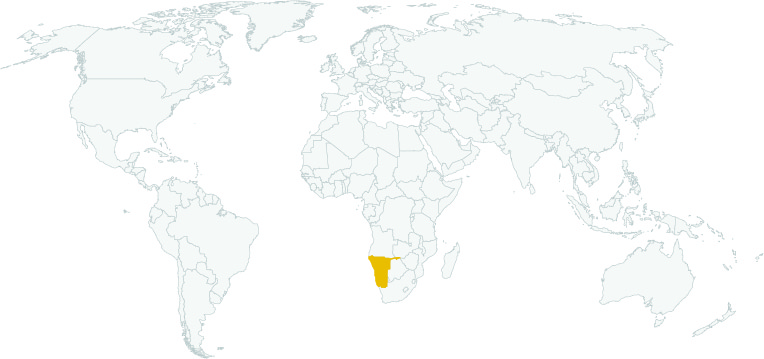

Namibia’s longstanding prohibition on the export of raw and unprocessed timber is aimed at curbing environmental degradation, creating local jobs and ensuring that the country derives greater economic value from its forest resources, the Ministry of Environment, Forestry and Tourism has confirmed. The restriction is contained in Regulations 7 and 12 of the Forest Regulations introduced in 2015,
Most Namibian timber exports are destined for Asian markets, particularly China, while some processed products are sold regionally, including to South Africa. To further discourage raw exports, government applies differentiated export charges, with unprocessed or minimally processed timber attracting higher levies than finished products.
The ministry has also addressed public concern over the frequent sight of trucks transporting logs on Namibian roads. Mwiikinghi clarified that many of these vehicles are transporting transit timber from neighbouring countries such as Zambia, passing through Namibia en route to ports.
“No raw timber material is allowed to be exported outside Namibia,” the chief forester Mwiikinghi said. “Timber must be processed, refined or semi-processed, and it must not exceed 15 centimetres in diameter.”
Through FSC-certified bush harvesting, Namibia is restoring degraded landscapes, powering the grid and creating thousands of green jobs.
Kleptocrats on the continent are profiting from the illicit forestry trade, which is estimated by Interpol and the United Nations Environment Programme to be worth $51 billion to $152 billion annually. Short summaries of the issue provided for DRC, Mozambique, Zambia, Equatorial Guinea, Namibia, Zimbabwe, Gabon, Tanzania, Kenya.
The International Programs Office of the USDA Forest Service has established a Wood Identification & Screening Center in Windhoek, Namibia. A rapid increase in exotic hardwood timber exports from Namibia, challenges in permitting and monitoring systems, and negative impacts from unrestrained timber harvesting are cited as increasing. Namibia serves as a transit point for both legal and illegal timber from neighboring countries and beyond.
Illegal logging is a growing feature of transnational organized crime in Africa, often facilitated by the collusion of senior officials, with far-reaching security and environmental implications for the countries affected.
 Key Resources

 Methodology
 Data Tools
Click here to access the Global Illegal Logging and Associated Trade (ILAT) Risk assessment tool and to download the Forest Trends User Guide describing the functionality of the ILAT Risk Data Tool.
Click here to access the Cattle Data Tool.
 Export Restrictions
 Trending