
 Back to Home Page


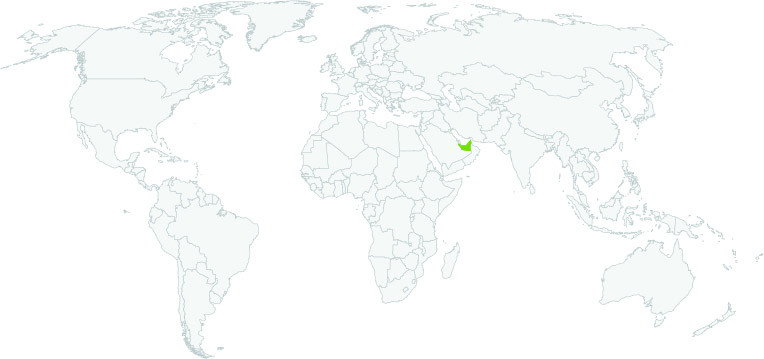

Mid July, the UK announced sanctions on 11 individuals and entities linked to Sudan’s conflict gold trade. The EU, followed by Switzerland, went further, banning the purchase, import or transfer of gold originating in Sudan, as well as restricting Sudan’s ability to get gold into the EU via other countries. This aims to shut down laundering of gold in third countries, such as the United Arab Emirates (UAE), a key trading route for illicit gold from Africa.
Welcome though these sanctions are, questions arise over whether the UK, EU or any other country has the means to effectively implement them: they will be only as strong as the customs system’s ability to verify origin post-refining. The Brussels-based World Customs Office defines the provenance of gold as the last country to have “substantially transformed it”, meaning gold refined in the UAE loses its Sudanese paper trail, and can be sold as ‘secondary gold’, with UAE designated as the new location of origin, or even as ‘recycled gold’.

In Ghana, a cocoa farmer waits an average of four years before seeing his first proper harvest. An illegal gold miner, on the very same land, makes a profit in a matter of weeks. Put like that, the contrast between the two commodities currently vying for the country’s land is almost self-explanatory — but behind that disparity in timeframes lies a specific regulatory decision (EUDR), taken in Brussels, which regulates one supply chain (cocoa) whilst leaving the other (gold) unchecked.
From a business perspective, the paradox is clear: Ghana is now the world’s second-largest cocoa producer, yet gold has already overtaken cocoa as the country’s leading export. Yet it is cocoa, not gold, that must underpin the investments in digital traceability, training for cooperatives and georeferencing systems required by Brussels. The Cocoa Traceability System developed by COCOBOD, the state body that manages the sector, uses field teams equipped with GPS-enabled smartphones to map every single farm.
Once gold is refined, you can no longer trace its source.’ A technical limitation that also becomes a limitation of the business model: according to Wiedmer, Switzerland manages around two-thirds of the global gold market, but ‘there is no regulatory body for the gold market’. The only point of reference is the London Bullion Market Association (LBMA), an industry self-regulatory initiative — “a project set up by the banks and refiners” — which sets standards without having the force of binding international legislation.
Gold is primarily an investment, so there is far less public pressure on this issue. Gold has institutional investors and savers who buy it as a safe-haven asset, often without any information about its mining origins.
In Switzerland, there is now a precious metals transparency platform developed by the technology firm aXedras on behalf of the Swiss Precious Metals Association (ASMP), which has been operational since 2023. It is an interesting attempt to apply the principles of digital traceability. But Swiss refiners no longer import gold from the Amazon region, but now the gold is sold in Dubai or directly in India.

A US White House report identified more than 40 jurisdictions, including the EU, Canada, Japan, and Brazil, as associated with a higher risk for illegal transshipments.
This report identifies more than 40 countries associated with elevated illegal transshipment risk. These jurisdictions vary significantly in economic scale and function. Some are major trading partners with diversified industrial bases and large volumes of overall commerce. Others are closely integrated into China-linked production and supply networks. A third group consists of smaller jurisdictions that offer specific advantages, including low labor costs, permissive free-zone rules, strategic port access, bonded warehousing, limited customs capacity, niche assembly operations, or preferential access to the U.S. market.
A UAE-led operation to tackle environmental crime in the Amazon basin has seen the arrests of 839 individuals and the seizure of harvested timber, illegal mining equipment, fuel and minerals that is valued over $280million.
It combined intelligence-led investigations, cross-border planning and real-time information sharing to tackle criminal networks involved in illegal mining, logging, wildlife trafficking, fuel smuggling, land grabbing and related crimes that threaten biodiversity, local communities and regional stability.
Coordinated from a multinational command centre in Bogotá, the operation involved the deployment of more than 3,600 law enforcement personnel and 1,045 field operations.

Vietnam’s exports of wood and wood products continued to grow in the first half of 2026, despite the impact of political conflicts, rising logistics costs, and increasingly stringent green standards from importing markets.
The United States remains the largest consumer market, accounting for nearly 50% of Vietnam’s total exports of wood and wood products. This is followed by China with 15% and Japan with 12.9%. However, there is a clear divergence in market trends. In the first five months of the year, exports to the United States decreased by 8%, while exports to China increased by 49% and to Japan by 5.1%. The Netherlands saw the strongest growth, while South Korea experienced the sharpest decline among the top 15 export markets.
Vietnam is currently among the top 5 largest wood product exporters in the world , with products present in nearly 170 countries and territories. However, Vietnam’s market share only accounts for about 7% of the total global wood product import demand, indicating significant room for growth.
The biggest bottleneck currently is the dependence on the US market, with approximately half of the industry’s export revenue concentrated there. This makes businesses vulnerable to changes in trade policies, tariffs, or trade protection measures. Therefore, diversifying markets to the EU, Japan, China, India, and the Middle East is becoming an urgent requirement.
The Production Forest Code (MSRT) has only been piloted on approximately 25,500 hectares in 5 northern provinces, while the whole country has nearly 4.9 million hectares of planted forests. The area of forests certified for sustainable management has reached about 868,000 hectares, but this is still insufficient to meet the demand for raw materials for export.

India’s wood panels are largely sold on specifications, price, and availability. Sustainability, when mentioned, is often reduced to certifications and technical claims. What is missing is a visible and relatable impact. Just as TOMS linked every purchase to a human outcome, wood panel brands can link every board sold to responsible forestry, community livelihoods, or carbon reduction initiatives in a way that customers can clearly understand and believe.
Malaysia has emerged as China’s fastest‑growing supplier of fibreboard, recording a remarkable 683% surge in shipments to 1,400 tonnes in the first nine months of 2025, according to new data from China Customs. The jump — the largest of any supplying country — comes as China’s total fibreboard imports rose 16% year‑on‑year to 45,000 tonnes – up to 50% of the world’s supply, signalling renewed demand from downstream manufacturers. New Zealand, Thailand, Germany, and Spain followed.
Vietnam remained China’s largest overseas market, with imports soaring 126% to 501,000 tonnes. Strong growth was also recorded in Saudi Arabia, Mexico, the United Arab Emirates, and Canada, each posting double‑digit increases. Exports to the United States and Nigeria softened, falling 9% and 1% respectively.
China’s wooden furniture sector, however, continues to face headwinds.
Export receipts fell 7% to US$16.69 billion in the first nine months of 2025, with shipments to the United States — China’s largest market — plunging 18% to US$4.24 billion. Despite the downturn, China maintained strong sales to other major destinations, exporting US$1.2 billion worth of wooden furniture to the United Kingdom and US$1.1 billion to Australia. Malaysia also remained a significant buyer, importing US$445 million worth of China‑made wooden furniture — an 18% increase year‑on‑year.
China’s wooden furniture imports also declined, falling 6% to US$461 million over the same period. Italy remained the largest supplier, accounting for 46% of China’s total imports, though shipments fell 9% to US$214 million. Declines were also recorded from Germany, Vietnam, and France. Whilst several smaller suppliers bucked the trend, with imports rising from Thailand, Slovakia, and Indonesia.
In recent years, the average violation rate has been around four per cent of total inspections.
In 2023, customs carried out around 300 inspections, uncovering 28 violations. The following year saw 600 inspections and 18 violations. In 2025, 584 shipments were checked, with 20 violations detected. A single shipment can contain multiple illegally harvested species. Most of the timber originates from India, the United Arab Emirates and Cameroon. It enters Belgium both as raw logs and processed items. This year, customs seized incense holders, coffee tables, bowls and boxes made wholly or partly from illegal wood, as well as four large carved elephants, each weighing several hundred kilos.

A new report from the Financial Accountability & Corporate Transparency Coalition warns that illegal gold mining has become one of the largest illicit economies in the Americas, in some cases generating more money than drug trafficking. The trade fuels transnational criminal groups such as Ecuador’s Los Choneros and Venezuela’s Tren de Aragua, threatens U.S. financial integrity through money laundering, and is linked to human rights abuses, displacement, and environmental destruction. In Peru, Venezuela, and Ecuador alone, the illegal trade is worth about $8 billion annually. Mercury pollution from mining devastates rivers and ecosystems, while Indigenous and Afro-descendant communities face malnutrition, disease, and rising violence. Brazil recently declared the Yanomami people in crisis due to illegal mining’s impacts.
The report criticizes the Trump administration for cutting staff and programs that targeted environmental crimes, reassigning DOJ prosecutors, reducing DHS enforcement capacity, defunding State Department initiatives, and dismantling USAID programs that once supported Peru’s anti-mining efforts. Meanwhile, traffickers exploit U.S. demand, smuggling gold disguised as jewelry or even buttons, with Miami airport seizures exceeding a ton in recent years. The U.S. financial system remains a key laundering hub, weakened further when Trump’s Treasury excluded most firms from beneficial ownership disclosure rules. Recommendations include restoring funding, tightening port and aviation monitoring, creating sanctions against environmental crime, and improving cross-border law enforcement. Regional cooperation has also advanced, with the Declaration of Bogotá signed by eight Amazon countries to address mercury use, traceability, and protection of environmental defenders.

Assets worth over $64 million were seized and 94 people arrested as part of a multinational law enforcement operation targeting environmental crime in the Amazon Basin.
The campaign, which ran from June 23 to July 6, mobilized more than 1,500 officers from Brazil, Colombia, Ecuador and Peru. Authorities conducted over 350 coordinated raids targeting illegal mining, wildlife trafficking, logging and fuel smuggling across some of the Amazon’s most remote and ecologically sensitive regions.
Dubbed Operation Green Shield, the crackdown was coordinated by the UAE’s Ministry of Interior through the International Initiative of Law Enforcement for Climate (I2LEC), a platform launched in 2023 to support climate-related policing. A central command center was established in Colombia’s capital, Bogota, with real-time data sharing, officials said.
Raids and arrests took place simultaneously across a wide stretch of the Amazon, including Sarare Indigenous Land in Brazil’s Mato Grosso state, home to the Nambikwara people, and El Cenepa Province in Peru’s Amazonas region, where the Kumpanam Indigenous community resides, authorities said.
In Brazil, authorities also deployed teams in Amapa state. In Colombia, operations were carried out in at least 22 departments, including Putumayo, Guaviare, Choco, Antioquia and Vichada. In Ecuador, law enforcement activity spanned dozens of locations from Carchi Province, home to the Awa Indigenous people, to Loja, Zamora, Santo Domingo and other provinces.

The global agarwood trade heavily depends on wild-harvested endangered tree species, despite international regulations for protection, with significant volumes going undocumented in official trade records, a new study reveals.
About 70% of the trade depend on Aquilaria filaria and Aquilaria malaccensis, both threatened species, sourced from the wild, raising major sustainability concerns. Meanwhile, there are some tree species that are not even covered by CITES, the global wildlife trade convention.
Due to discrepancies between CITES and customs data, along with weak enforcement and outdated regulations, researchers suggest the illegal trade is far larger than reported.
Researchers urge stronger monitoring, updated data, expanded species protection, and a shift to cultivated sources. They also call on consumers and wealthy importers to support conservation and governments to promote sustainable practices.

A multinational law enforcement operation codenamed ‘Operation Jungle Shield’, coordinated by the International Initiative of Law Enforcement for Climate (I2LEC), has uncovered extensive environmental crimes across the Congo Basin. The operation hit at organized crime groups, seizing 2,111kg of ivory and 34 kg of pangolin scales, rescuing a live pangolin from trafficking, and confiscating 180 pieces of equipment used for criminal activities. 58 suspects were arrested and charged with various environmental crimes. The total value of seizures is estimated at US$11,227,857. Additionally, the operation identified illegal logging and charcoal production activities, which are estimated to have resulted in 213,227 tons of CO2 emissions.
Many of the illegal activities uncovered were found to be destined for Asian markets.

Saudi Arabia is poised to become one of the world’s largest consumers of timber, fuelled by several ‘mega’ and ‘giga’ projects, including the NEOM, the Red Sea Project, Trojena and Qiddiya – which could see the market for timber-based products reach more than US $4.1 billion by 2029.

The American Hardwood Export Council (AHEC), the leading international trade association for the American hardwood industry, announced the latest data from the United States Department of Agriculture (USDA), which reveals a notable 6% growth in exports of U.S. hardwood lumber to the Middle East and North Africa (MENA) region during the first half of this year. Shipments reached a total value of USD 34.93 million during the January to June period.
Significant increases were seen in hardwood lumber exports to the United Arab Emirates (UAE), Saudi Arabia, and Egypt. Exports to the UAE saw a remarkable 27% increase in volume, reaching 10,192 cubic meters. Saudi Arabia experienced an 8% rise in volume, totaling 4,472 cubic meters. Egypt also showed a positive trend with a 15% increase in volume, amounting to 3,651 cubic meters. These gains reflect the booming construction sector in the Arabian Gulf, particularly in the UAE and Saudi Arabia, as well as Egypt’s gradual economic recovery after several challenging years.

The Middle East is pivoting from concrete-and-steel-based construction to timber, with the UAE and Saudi Arabia leading the regional green switch. And whilst the number of timber buildings out of the ground is small, Wood Central can reveal that imports of plywood and other timber products have tripled to Dubai and Riyadh in the last 12 months alone.

Poland is the new gateway for Belarussian timber, with the import of timbers (via Kazakhstan) surging. A joint investigation involving the Belarussian Investigative Center, Radio Free Europe, and Polish newspaper Gazeta Wyborcza alleges that Polish imports of timber from the largely deforested Kazakhastan grew from €14 million (pre-war) to more than €68 million last year as part of a €126 million global trade in conflict timber.
Also featured in Belarus evading EU sanctions by importing timber to Poland with false documents, finds investigation | Notes From Poland and Fraud Exposed: Poland Now EU’s Ground Zero for Conflict Timber | Wood Central

Timber trade from Belarus has increased six times since the start of the Ukraine conflict amid fears that Azerbaijan is being used to bypass sanctions. Since early 2022, western sanctions on Russian and Belarussian trade have limited the export of pulp, paper and softwood to nine countries – China, Kazakhstan, Belarus, Uzbekistan, Iran, Kyrgyzstan and the United Arab Emirates and Azerbaijan
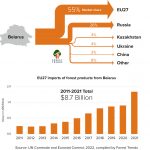
Russia and Belarus are ramping up timber exports to Uzbekistan amid fears the former soviet state could act as a new trading post for conflict timber entering global timber supply chains.
It comes as Uzbekistan is spending billions on new rail, road and sea infrastructure, funded by China’s Belt and Road Initiative, forging new pathways for timber to infiltrate global supply chains.
Already, Uzbekistan is Russia’s second-largest importer of softwoods, with 480,000 cubic metres of timber (or 11% of its total imports) imported into the country every quarter – in what is a significant escalation in trade since the start of the Russian invasion of Ukraine.
It comes as Wood Central reported in July that a block of ten countries – including Uzbekistan as well as China, Kazakhstan, Belarus, Iran, Kyrgyzstan, the United Arab Emirates, Azerbaijan, and Tajikistan – is fueling a booming trade of conflict timber bypassing western sanctions.

Indonesia’s furniture and crafts exports reached US$2.8 billion in 2022 and the government hopes that exports will increase to US$5 billion in 2024.
The Ministry of Industry has two strategies to improve profitability in the sector. First, greater emphasis on the domestic market as the size of this market, especially the middle class segment, continues to expand. The second is exports to non-traditional markets for example India and the Middle East where growth in the property sector is relatively stable.
The Indonesian Furniture and Craft Association (HIMKI) chairman, Abdul Sobur, revealed that exports to the EU declined in 2022 so HIMKI members are now investigating the Middle East markets such as Qatar, Israel and the United Arab Emirates.
 Key Resources

 Methodology
 Data Tools
Click here to access the Global Illegal Logging and Associated Trade (ILAT) Risk assessment tool and to download the Forest Trends User Guide describing the functionality of the ILAT Risk Data Tool.
Click here to access the Cattle Data Tool.
 Export Restrictions
 Trending