
 Back to Home Page


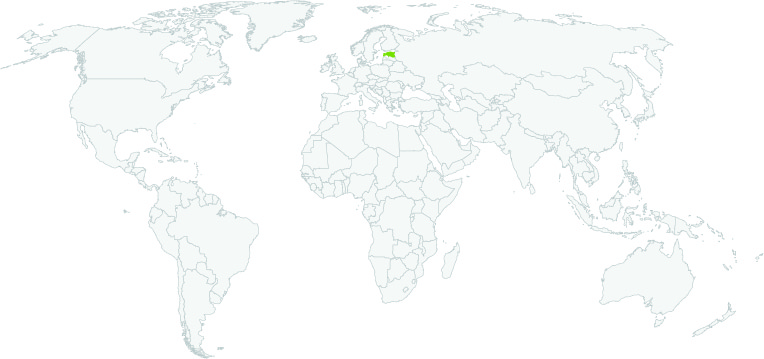
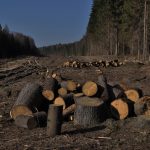
A Czech investigation has found Russian larch still reaching the country relabelled as Chinese, four years after EU sanctions cut off direct imports, in a trade Russia’s own figures show is now dominated by China.
That is according to a Czech media investigation, reported by Espreso.tv and carried by Ukraine’s 112 International, which found shipments routed through China surging from a few tonnes a year to hundreds as direct Russian imports fell to zero.
“The demand for Russian lumber is growing among friendly countries,” said Petr Mikka, head of information systems and the State Forest Register at the agency, confirming a 5 per cent rise on the 22.7 million cubic metres shipped in 2024. Softwood, the category that includes larch, made up 93.6 per cent of the wood sent to those markets.
That the relabelling is real, and not merely alleged, has since been confirmed at the highest level. A European Commission investigation found evidence of finished Russian plywood laundered and re-labelled as Kazakh or Turkish in origin, a breach of the sanctions imposed after the invasion, after inspectors confirmed firms in both countries were using Russian raw material to make birch ply for the European market.
The scale of that leakage is substantial, with an Earthsight investigation estimating timber worth some US$13 million enters the EU each month from Kazakhstan, China and Turkey, much of it tied to oligarch-owned firms and routed through false country-of-origin paperwork. The group has since filed complaints against 31 EU companies over Russian wood in their birch ply supply chains.
Under EU rules, sanctioned Russian and Belarusian wood processed to a sufficient level in a third country takes on that country’s origin, clearing it for import into markets where the ban applies. It is a threshold the bloc’s own sanctions envoy concedes is being gamed, with China a “very big problem” for the effectiveness of measures against Russia.
Some transit states are moving to close the gap, with Kazakhstan tightening export controls to limit the passage of sanctioned goods. Estonian customs have brought more than 100 origin-fraud proceedings over timber routed through Kazakhstan, whilst Estonia and Poland have pressed Brussels to require exporters to prove their raw material is not Russian.
The Baltic countries have already warned Prague that the restrictions are being circumvented, a warning the Czech trade appears to confirm. One Czech buyer, speaking anonymously to the investigation, described a supplier relationship that outlasted the ban: “One of our long-time Russian suppliers offered to keep delivering,” the trader said, having stopped buying Siberian larch when the war and sanctions began.
Estonian producers say laundered timber disguised through Kazakhstan, Turkey, and China is undercutting compliant operators by up to 30% — as customs authorities push Brussels for tighter controls.
Opmann said timber is routinely offered at prices 20 to 30 per cent lower than the market standard, creating a competitive headache for compliant operators. “Who does it impact? The Russians are pushing prices down, and then the customer asks, ‘What can you do [about the price]?’ I can do nothing,” she said.
Lab research released last year found that nearly half of the birch tested in a sample from the United Kingdom and the United States was mislabelled, raising serious concerns that the material had actually originated in Russia or Belarus.
Through 2024 and into 2025, the Estonian Tax and Customs Board (ETCB) ramped up controls on plywood imports from Kazakhstan and China, leading to a significant drop in volumes. The agency said last August it had initiated over 100 proceedings for origin fraud connected to timber imports from Kazakhstan, finding in many cases that the processing carried out there was insufficient to confer Kazakh origin on the product.
Estonian producers say laundered timber disguised through Kazakhstan, Turkey, and China is undercutting compliant operators by up to 30% — as customs authorities push Brussels for tighter controls.
Sanctioned timber from Russia and Belarus, disguised under false country-of-origin documentation, continues to flood global wood markets — and legitimate producers are paying the price. That’s the message from the CEO of one of the Baltic region’s leading manufacturers, who says the flow of sanctioned wood is driving prices down across the board. Opmann said timber is routinely offered at prices 20 to 30 per cent lower than the market standard, creating a competitive headache for compliant operators.
The ban covers wood and related products exported from Russia and Belarus, but if sanctioned material is processed and transformed to a sufficient level in a third country, that country becomes the official origin, enabling import into EU and UK markets where sanctions apply.
Through 2024 and into 2025, the Estonian Tax and Customs Board (ETCB) ramped up controls on plywood imports from Kazakhstan and China, leading to a significant drop in volumes. The agency said last August it had initiated over 100 proceedings for origin fraud connected to timber imports from Kazakhstan, finding in many cases that the processing carried out there was insufficient to confer Kazakh origin on the product.
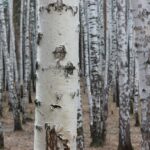
Nearly half of all sampled birch products—used in furniture, kitchen panels, and musical instruments—certified by FSC or PEFC have been misidentified and do not come from the correct country of origin. 44% of the evaluations showed that documentary claims relating to wood fiber species or harvest location were incorrect. 46% of certified products had claims that were incorrect.
High percentages of incorrect claims were found for wood fiber from products with harvest location claims in Ukraine, Poland, Estonia, and Latvia, all of which border sanctioned birch production areas.
In 2024, FSC and Assurance Services International (ASI) launched a transaction verification (TV) loop on FSC-certified birch wood panels in China and Europe. The preliminary results from the first phase of the TV loop – data collection and analysis – reveal a number of integrity risks in certified birch wood panel supply chains. The risks will be evaluated in the next stages of the investigation. The TV loop captured 3,436 transactions that took place in 2023, as reported by 665 certificate holders with physical possession of certified material from 18 countries in the Eurasian region. They are Bosnia and Herzegovina, Bulgaria, China (including Hong Kong), Latvia, Romania, Slovakia, Croatia, the Czech Republic, Estonia, Georgia, Greece, Hungary, Lithuania, Moldova, Poland, Slovenia, Serbia, and Ukraine.
Some of the key findings and the integrity risks they pose to certified birch wood panel supply chains are:
- Around 74 % of the certificate holders reported zero transactions (no purchases or sales) of birch products, many of which were from China. This is indicative of a potential risk because there are multiple stakeholder reports alleging a large supply of birch products originating in China.
- Concerning cases of potential volume mismatch: some certificate holders reported purchases while their suppliers reported zero sales. Additionally, some certificate holders declared the purchase or sale of specific (‘zero transaction’) Betula species that were not within the suppliers’ certificate scope or geographic region.
- A large volume of birch logs purchased from Ukrainian forests may potentially originate from the conflict area. In light of the current suspension of the FSC certificates in specified conflict zones, the reported volume of domestic purchases from Ukrainian forest management units and the volume of wood panels exported from Ukraine are a cause for concern.
- None of the certificate holders participating in this TV loop declared any purchase or sale of birch from Russia within the scope of their FSC certification. However, potential mismatches between the volume of wood purchased and sold through the supply chain may be a result of non-certified wood (including that from Russia) entering the certified supply chains.
The investigation shows that Russian plywood is being smuggled en masse into numerous EU member states and that efforts by authorities to clamp down have been woefully inadequate. As a result, illegal blood-stained birch worth over 1.5 billion euros has been sold in Europe since sanctions took effect.
Piecing together information from insider leaks, trade documents and clandestine calls, we reveal the actorsThe investigation shows that Russian plywood is being smuggled en masse into numerous EU member states and that efforts by authorities to clamp down have been woefully inadequate. As a result, illegal blood-stained birch worth over 1.5 billion euros has been sold in Europe since sanctions took effect.
Piecing together information from insider leaks, trade documents and clandestine calls, we reveal the actors at every stage of the supply chain – from the manufacturing giants in Russia, through to the firms laundering their products in China, Kazakhstan and Turkey, and their customers in the EU.
at every stage of the supply chain – from the manufacturing giants in Russia, through to the firms laundering their products in China, Kazakhstan and Turkey, and their customers in the EU.

This article mentions a recent EUTR action whereby Belgian new genetic techniques to identify 260 tonnes of timber imported into Belgium from Russia illegally. Suspecting that Russian timber imports were continuing despite sanctions imposed after Russia’s invasion of Ukraine, researchers analysed samples against a sub-set reference library that related to the twelve nations thought the most likely candidates for the wood’s true origin, including samples taken from Russia. Having identified Russia as the region of origin, authorities were then able to trace the supply chain back through Latvia and Estonia, closing down an illegal import route and a lucrative Russian revenue stream.
The TV loop aims to identify and take action against instances of false claims or other violations of FSC requirements.
The scope of this Eurasia birch wood panels TV loop is:
- Geographic areas: China and central and eastern European countries (Bosnia and Herzegovina, Bulgaria, Croatia, Czech Republic, Estonia, Georgia, Greece, Hungary, Latvia, Lithuania, Moldova, Poland, Romania, Serbia, Slovakia, Slovenia, and Ukraine).
- Product type: Plywood
- Species: Birch (Betula)
FSC Estonia may soon disappear if the certifying body does not abandon additional requirements that the largest wood owner in Estonia, RMK, does not intend to agree with on principle. The wording under discussion includes a point about how to consider indigenous peoples.
 Key Resources

 Methodology
 Data Tools
Click here to access the Global Illegal Logging and Associated Trade (ILAT) Risk assessment tool and to download the Forest Trends User Guide describing the functionality of the ILAT Risk Data Tool.
Click here to access the Cattle Data Tool.
 Export Restrictions
 Trending