
 Back to Home Page


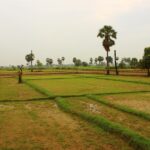
By integrating the best available spatial and statistical datasets, a new deforestation attribution framework (DeDuCE) provides a detailed quantification of deforestation associated with the production of agricultural and forestry commodities. DeDuCE reports 9,332 unique country–commodity deforestation–carbon footprints across 179 countries and 184 commodities annually from 2001 to 2022. Our findings indicate that while global efforts to curb deforestation appropriately focus on cattle meat, oil palm, rubber, soya, cocoa and coffee, global monitoring efforts have largely overlooked staple crops such as rice, maize and cassava.

The EU is importing less logs and plywood, and burning less wood pellets for fuel as uncertainty over tariffs and duties, persistently weaker construction demand. Customs data shows that shipments of logs, plywood, and pellets all contracted year‑on‑year in November, even as prices for several products began to rise.

The timber industry across the EU and UK has come together to assert its steadfast commitment to rejecting Russian and Belarusian wood products. Leading industry associations, including CEI-Bois, ETTF, EOS, and TDUK, have signed a united statement to reinforce their strong stance against illegal wood imports.
The statement, published on the Timber Development UK (TDUK) website, echoes the legal obligations and responsibilities that operators in the timber industry must adhere to. It outlines that the purchase, importation, or transfer of timber products originating from Russia or Belarus remains strictly prohibited under both EU and UK sanctions. This has been the case for several years, yet challenges remain in curbing the presence of prohibited wood in European markets.

A new Greenpeace report, Nature Crime Files – Romania – Greenpeace International, followed the traces to the suppliers of furniture companies, such as IKEA. By closely examining the entire supply chain, from logging sites to wood depots, including scrutinising transport permits with geolocation attributes, and visiting processing facilities Greenpeace CEE found old-growth or other high conservation value destruction linked to at least seven different IKEA suppliers in Romania. Investigations identified at least 30 IKEA products, and some of IKEA’s well-known furniture, originating from these producers, raising a concern that wood from old-growth forests could ultimately end up in homes all over Europe and beyond.

The tracking system, known as SUMAL, depends on truck drivers uploading photographs of the wood they’re transporting, but it cannot detect fake images. Reporters discovered that some drivers had submitted photographs of drinking parties, chairs, and truck tires that went undetected.
In other cases, drivers are taking photographs of photographs, or reusing the same photos of wood multiple times, thereby obscuring the true contents of their trucks.
A transport company owned by the Austrian wood panel producer Kronospan has submitted what appear to be copied images for more than 240 transports of wood. Although Kronospan is almost certainly not the biggest offender, it is a multinational company with a supply chain spanning Europe.
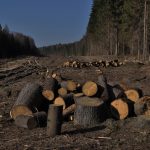
A cross-border probe, led by ICIJ and first published in March 2023, involved 44 media partners globally and documented how Western environmental auditing firms and governments failed to stop the trade of wood logged in conflict zones.
The findings supported a June investigation from ICIJ partners Paper Trail Media, Der Spiegel, ZDF and others that similarly revealed how Russian timber continued to circumvent the EU’s embargo, making its way into the bloc by routing through countries like China, Turkey, Kazakhstan and Kyrgyzstan.
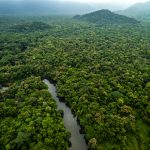
In March 2023, the ICIJ and 39 media partners published Deforestation Inc., a global investigation that exposed flaws in environmental auditing and certification programs intended to promote responsible forestry and combat illegal logging and deforestation. For this month’s episode of the Meet the Investigators podcast, we recorded a special live panel featuring reporters who had visited ravaged forests, tracked shipments of timber around the world, and trawled through corporate documents, leaked files and more to uncover the many ways in which a system designed to protect the environment, consumers and investors is failing with concerning frequency.
The situation in Myanmar, Romania, Indonesia, Germany is featured, as well as with the extent and nature of problems with falsified documents and certification systems more broadly.

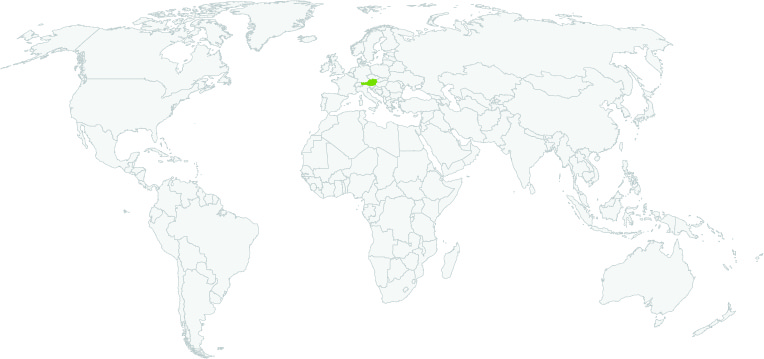
An investigation by German publication Der Spiegel shows that Romania’s forests, some of the oldest in Europe, are threatened by large-scale illegal deforestation. The journalists explain in the investigation how several Austrian companies with tens of thousands of employees have made profits by contracting Romanian suppliers who illegally cut down trees.
The forests that the German journalists write about are located in Moldova, in the county of Suceava. The report was based on a previous large-scale investigation by Romanian authorities in the town of Bogdănești, which involved approximately 1,800 Romanian investigators. Among the crimes investigated by local authorities were illegal deforestation, money laundering, and tax evasion.
 Key Resources

 Methodology
 Data Tools
Click here to access the Global Illegal Logging and Associated Trade (ILAT) Risk assessment tool and to download the Forest Trends User Guide describing the functionality of the ILAT Risk Data Tool.
Click here to access the Cattle Data Tool.
 Export Restrictions
 Trending