
 Back to Home Page


Russia’s largest forest company has reported a net loss of 88 billion rubles (around US$1.1 billion) last year, four times the prior year’s 22 billion ruble loss.
China took 77 per cent of Segezha’s lumber last year, yet weak demand and a strengthening ruble drove a 9 per cent sales drop as Canada, Sweden and Finland moved into Russia’s former volume.
To explain the reduction in trade to India, Segezha cited tariff restrictions and India’s BIS certificate requirement as factors squeezing exports, reporting a 50 per cent jump in domestic shipments to end customers in Russia as a partial offset.
European investment funds marketed as “sustainable” continue to hold large positions in companies whose activities drive deforestation and fossil-fuel expansion, revealing a significant gap between their branding and actual financial flows. €9 billion in so-called green funds are effectively bankrolling activities linked to Amazon degradation, despite commitments under the EU’s Sustainable Finance Disclosure Regulation. Major asset managers have included fossil fuel and agriculture-linked firms in portfolios labeled as sustainable, raising concerns about widespread greenwashing in the financial sector. Critics argue that current ESG criteria are too weak or too loosely applied, allowing capital to flow to companies with business models at odds with stated climate and biodiversity goals. The investigation also highlights the lack of transparency in how funds define and screen for sustainability, which can mislead investors and the public. Calls for regulatory tightening and clearer standards are growing, as policymakers and civil society push for sustainable finance to align more closely with environmental outcomes.
North America is the major beneficiary of the EU’s Green New Deal, with huge shipments of imported lumber to replace European-sawn wood and panels that will be limited under the LULUCF Regulation.
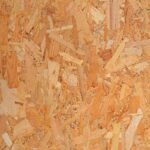
Russia and Belarus now account for 70% of all Chinese lumber imports.
Russia is ramping up plywood production, with exports to China surging more than 344%, according to new data provided by Roslesinforg – the Russian state-owned customs agency.
The latest numbers come after China Customs reported that exports to China had tripled for March. environmental groups have flagged concerns that China is operating as a broker for Russian and Belarussian timber, with plywood made from Russian birch entering European markets via China, Vietnam and a series of “friendly countries” across Eurasia.

Lumber exports from the EU’s largest timber economies are in decline, thanks to a shortage in biomass in the Baltic states. However, with the roll out of the Green New Deal there are concerns that European countries will not be able to balance increased harvesting with climate commitments.
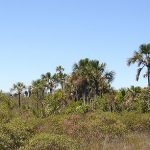
The destruction of the Cerrado is closely linked to the growing demand for meat and dairy. This report shows that some of the world’s largest investment funds that have put billions into buying farmland in the Cerrado, including pension funds in Sweden and Germany, Harvard University’s endowment, and the Teachers Insurance and Annuity Association, better known as TIAA, the $1.2 trillion pension fund for 5 million people across the United States. Thanks in part to its investments in Brazilian farmland, TIAA has become one of the largest farmland investors in the world. Through its wholly owned subsidiary, Nuveen Natural Capital, the fund has accumulated some 3 million acres across 10 countries. Its investments in Brazil, where it manages 1 million acres, are some of its most controversial holdings.
 Key Resources

 Methodology
 Data Tools
Click here to access the Global Illegal Logging and Associated Trade (ILAT) Risk assessment tool and to download the Forest Trends User Guide describing the functionality of the ILAT Risk Data Tool.
Click here to access the Cattle Data Tool.
 Export Restrictions
 Trending