

Integrating invasive mammal eradications and biodiversity offsets for fisheries bycatch: conservation opportunities and challenges for seabirds and sea turtles
C. Josh Donlan, Chris Wilcox - Biol Invasions, Biol InvasionsThe removal of invasive mammals from islands is one of societys most powerful tools for preventing extinctions and restoring ecosystems. Given the demonstrable high conservation impact and return on investment of eradications, new networks are needed to fully leverage invasive mammal eradications programs for biodiversity conservation at-large. There have been over 800 invasive mammal eradications […]
National Objectives and Targets for Biodiversity Conservation, 2001-2005
Government of AustraliaBiodiversity describes the organisms in the natural environment, which provide the ecosystem services that form our natural capital: fresh water, clean air, soil fertility and biological pest control. Biodiversity is fundamental to the future sustainability of the worlds natural resources. A recent report by the World Resources Institute values the free ecosystem services at over […]
Council Directive 92/43/EEC of 21 May 1992 on the Conservation of Natural Habitats of Wild Fauna and Flora: Annex V
European UnionThe species listed in this Annex are indicated: by the name of the species or subspecies, or by the body of species belonging to a higher taxon or to a designated part of that taxon.
Model Operational Guidelines for Creating or Restoring Wetlands that are Ecologically Self-Sustaining for Aquatic Resources Impacts Under the Corps Regulatory Program Pursuant to Section 404 of the Clean Water Act and Section 10 of the Rivers and Harbors Act
United States Army Corps of EngineersIn its comprehensive report entitled Compensating for Wetland Losses Under the Clean Water Act, the National Research Council (NRC) provided ten guidelines to aid in planning and implementing successful mitigation projects (Operational Guidelines for Creating or Restoring Wetlands that are Ecologically Self-Sustaining; NRC, 2001). Please note that these guidelines also pertain to restoration and enhancement […]
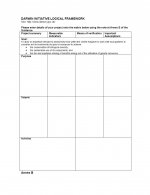
Darwin Initiative Logical Framework
Kerry ten KateThe Logical Framework is a management tool that aims to promote good project design and execution by clearly stating the key components, how the project is expected to work, and how success will be measured. It ensures that the whole project process is considered before the work begins thereby avoiding problems that may be costly […]
A Case for Biodiversity Offsets in India
from Biodiversity Risk to Competitive Advantage
Divya NarainAs the Indian economy is moving up the growth curve, the countrys biodiversity is taking a beating. Even though legislation is in place to regulate and compensate for diversion of forests for non-forest uses, diversion and the resultant biodiversity loss continue unabated. The regulatory compensation regime has fallen woefully short of truly offsetting the biodiversity […]
Working towards NNL of Biodiversity and Beyond
Amrei von Hase - Forest TrendsSolid Energy became a member of the Business and Biodiversity Offsets Programme (BBOP) and offered the Strongman Mine II as a pilot project in 2007. In 2009, Solid Energy together with BBOP published a case study on the biodiversity management and offset work undertaken at Strongman up to that point (available at https://www.forest-trends.org/documents/fi les/doc_3124.pdf). The […]
Environmental Offset Policies, Principles, and Methods: A Review of Selected Legislative Frameworks
Bruce McKenneyEnvironmental offsets seek to ensure that unavoidable adverse environmental impacts of development are counterbalanced by environmental gains, with the overall aim of achieving a net neutral or beneficial outcome. In line with sustainable development, offsets represent one important tool for maintaining or enhancing environmental values in situations where social and economic development is sought despite […]
Victoria ‘s Native Vegetation Management: A Framework for Action Summary Brochure 2
Government of AustraliaThe National Land and Water Resources Audits Australian Native Vegetation Assessment 2001 provides an analysis of clearing across Australia. Five of the 85 bioregions (areas with similar characteristics of landscape and native plant and animal types) in Australia have less than 30% of pre-1750 native vegetation cover remaining. Four of these five bioregions are found […]
Opportunities forBenefiting Biodiversity Conservation
The Energy and Biodiversity Institute