Edited and translated by Debora Batista and Melissa Panhol
As the world moves to scale climate finance through Jurisdictional REDD+ (J-REDD) programs, a central question emerges: who benefits and how? Initiatives like the LEAF Coalition (Lowering Emissions by Accelerating Forest Finance) represent promising efforts to mobilize large-scale results-based finance for forest protection. Yet, their success ultimately depends on whether Indigenous Peoples, Local Communities, and Afrodescendants (IP, LC, & AD) are not only treated as beneficiaries but as crucial co-designers and decision makers in how those resources are best distributed and governed.
For over two decades, Forest Trends has worked at this intersection, linking global climate mechanisms with local realities. Through our Communities and Territorial Governance Initiative (CTGI), we collaborate with IP, LC, & AD across Latin America and the Global South to strengthen territorial governance, secure rights, and connect forest stewardship with fair and transparent finance mechanisms. Some of our recent projects focus on building directly on this mission, advancing inclusion and equity within jurisdictional REDD+ programs.
Lessons from the Field: Building Bridges for J-REDD
From 2023 to 2025, Forest Trends, through CTGI and its partner in Brazil Greendata, worked with IP, LC, & AD organizations and governments across the Brazilian states of Pará and Amapá, the state of Jalisco in Mexico, and Ecuador. The goal was to enhance IP, LC, & AD expertise to better engage with emerging J-REDD frameworks, including the ones supported by LEAF Coalition, and also to lay the groundwork for equitable benefit sharing and Free, Prior, and Informed Consent (FPIC) processes.
Over 21 workshops and dialogues involving more than 500 participants, Indigenous and local organizations strengthened their understanding of REDD+, ART, the Architecture for REDD+ Transactions, their TREES standard, and the concepts around jurisdictional approaches as a whole. Constructive dialogue tables were organized between IP, LC, & AD leaderships and government officials, creating spaces for direct and honest exchanges that helped build mutual trust and transparency. The project also launched the IPLC Resources Center, currently hosting over 100 materials in English, Spanish, and Portuguese on REDD+, climate finance, and Indigenous and community rights.
Despite political transitions in all three countries, the project maintained its momentum by adapting flexibly, shifting focus where necessary, and emphasizing culturally grounded facilitation. It demonstrated that effective jurisdictional REDD+ depends not on rigid plans but on relationships rooted in trust, respect, and shared ownership.
Building on Experience: From SISA to LEAF
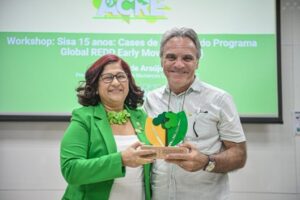
The roots of this work reach back to the SISA Program in Acre state, Brazil, one of the world’s first jurisdictional REDD+ systems, which Forest Trends helped design in 2010. SISA, which stands for Environmental Services Incentive System in its acronym in Portuguese, taught us that governance is not a byproduct of carbon markets, it is their foundation. This pioneering experience led by Acre, demonstrated the importance of establishing benefit-sharing mechanisms that reflect local governance and values, rather than imposing external templates.
Today, as LEAF and other jurisdictional programs expand, these lessons remain vital. Jurisdictional systems must move beyond top-down transactions to embrace FPIC as a continuous, living process. Benefit sharing must not only redistribute financial gains but strengthen territorial governance, cultural resilience, and social equity. In that sense, jurisdictional integrity must include social integrity.
Knowledge Tools for Inclusion
Alongside field engagement, Forest Trends has developed complementary tools to support IP, LC, & AD leadership in climate and conservation finance. Our Resources Center offers practical guides, training materials, and visual resources to help communities navigate complex policy and financial frameworks. Our Understanding Climate Finance series, a series of seven educational booklets, explain concepts such as climate change, carbon markets, REDD+ and J-REDD, FPIC, benefit sharing, LEAF, ART, and the TREES standard, available in English, Portuguese and Spanish. We hope these tools are able to contribute to enabling communities to better participate in the complex climate and conservation finance spaces, in more informed ways and with decisive power to decide the best routes to their communities and people.
These knowledge efforts are reinforced by our newest 2025 publication, the first edition of the State of Climate and Conservation Finance for Indigenous Peoples and Local Communities Report, providing a global view of flows of climate and conservation finance resources that actually reach IPs & LCs directly. Building on current literature, with added research, interviews and data analysis, its conclusions underscore why transparency and direct access to funding must become non-negotiable elements of any credible climate finance architecture.
Equity is not charity, it is efficiency. When IP, LC, & AD are at the center of design and decision making, outcomes are stronger, more durable, and more legitimate, benefiting not only the environment and communities on a local level, but all ecosystems and peoples at a global scale. IP, LC, & AD governance systems, cultural wisdom, and stewardship of nature remain the world’s most effective climate and biodiversity conservation strategy.
A Call for Equity as Integrity
Looking back at COP30 in Belém, where Brazil hosted over 3,500 Indigenous leaders at the Aldeia COP, a historic space co-organized by the Ministry of Indigenous Peoples of Brazil and many partners, including Forest Trends, our collective responsibility is clear: jurisdictional REDD+ must continue evolving toward co-governance and fair distribution of benefits.
In this spirit, Forest Trends hosted a side event during the Estação Amazônia Sempre fair organized by the Inter-American Development Bank (IDB), titled “Climate Finance: Leadership of Forest Guardians.” This session explored pathways to make climate finance more equitable and effective by ensuring IP, LC, & AD take the lead in J-REDD initiatives, with experiences from Brazil’s Ministry of Environment and the Environment Secretariat of Amapá state.

At Forest Trends, we see this as a shared journey. Jurisdictional programs such as those supported by the LEAF Coalition, but not limited to it, have the potential to deliver significant results when they actively integrate IP, LC, & AD leadership, respect rights, and strengthen trust between communities, governments, and markets. True impact depends on inclusive governance that recognizes and rewards those who safeguard forests.
The future of J-REDD relies on relationships. Together, we can ensure that every ton of CO₂ represents not only climate impact but also justice, inclusion, biodiversity, shared prosperity, and the protection of IP, LC, and AD rights and traditional knowledge. When we do, the benefits of climate action extend far beyond borders and communities, reaching the whole planet.
Viewpoints showcases expert analysis and commentary from the Forest Trends team.
Connect with us on Facebook and Twitter to follow our latest work.