As jurisdictional climate finance continues to scale, a central question remains unresolved: How can these programs meaningfully include Indigenous Peoples, Local Communities, and Afro-descendant Peoples (IPs, LCs, & ADs), whose territories and governance systems are essential to forest protection?
From 2023 to 2025, Forest Trends’ Communities and Territorial Governance Initiative explored what inclusive, rights-based engagement can look like in practice across Brazil, Mexico, and Ecuador. The first phase of this work focused on building trust, strengthening governance, and creating space for Indigenous and community organizations to engage directly with governments on jurisdictional REDD+ design.
At the subnational level, Forest Trends partnered with institutions like the Secretariats for Indigenous Peoples and the Environment in Pará and Amapá, Brazil, the Secretariat of Environment and Territorial Development in Jalisco, Mexico, and the Ministry of Environment in Ecuador. At the same time, the project supported Indigenous and community organizations, including the Federation of Indigenous of the State of Pará (FEPIPA) in Brazil, the Confederation of Indigenous Nationalities of the Ecuadorian Amazon (CONFENIAE), the Afro-Ecuadorian Region of Northern Esmeraldas (CANE), and the Mexican Network of Peasant Forestry Organizations (Red MOCAF).
This work went beyond consultation. More than 500 participants took part in over 20 workshops, dialogue tables, and cross-jurisdiction exchanges that addressed benefit sharing, Free, Prior, and Informed Consent (FPIC), and the technical foundations of jurisdictional climate finance. These spaces increased participation by women and youth and strengthened organizational confidence to engage in governance and program-design discussions.
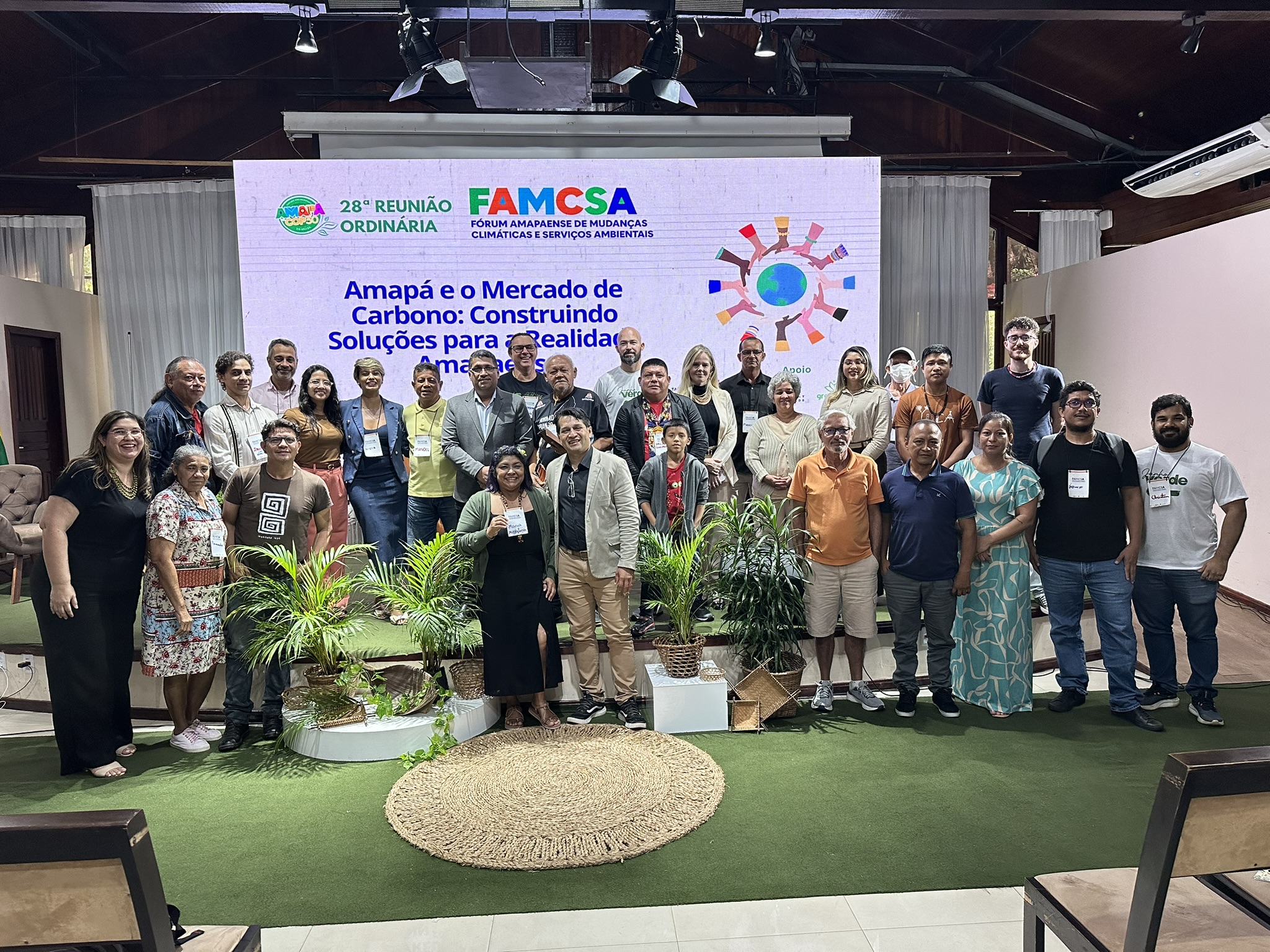
For many participants, this was their first opportunity to understand how initiatives such as the LEAF Coalition and the ART TREES standard relate to community-led processes like consultation, FPIC, and benefit sharing. One young Shuar leader from Ecuador explained that the process helped transform uncertainty into clarity about roles, responsibilities, and rights.
The project also contributed to broader learning beyond national borders. Exchanges between leaders from Brazil, Mexico, and Ecuador helped identify shared challenges and collective strategies for engaging with jurisdictional climate frameworks. These conversations laid early groundwork for future agreements on transparency, FPIC, and benefit sharing. As a representative for the Intermunicipal Environmental Council for the Valles Region in Mexico shared:
“Before these activities, there was significant uncertainty around how jurisdictional REDD+ works and how communities could engage. The workshops helped clarify opportunities, roles, and responsibilities, and highlighted the importance of continued training to ensure informed participation by communities and local actors.”
Knowledge products were another key outcome. The project supported the first edition of the State of Climate and Conservation Finance for Indigenous Peoples and Local Communities report, which documents the persistent gap between forest stewardship and the finance that reaches communities directly. In addition, the IPLC Resources Center was launched as a multilingual platform offering more than 100 resources in English, Portuguese, and Spanish to help communities navigate REDD+ and climate finance processes.
As Forest Trends moves into the next phase of this work, the focus shifts from experimentation to institutionalization. New efforts will center on co-developing Principles for Effective Engagement, piloting inclusive consultation frameworks, expanding tailored technical assistance, and deepening global analysis through a second edition of the State of Finance report.
Ultimately, this work is about transforming how climate finance operates. By grounding jurisdictional approaches in rights, transparency, and co-governance, Forest Trends and its partners aim to support climate solutions that are not only effective, but durable, equitable, and shaped by the communities most affected by climate change.
Viewpoints showcases expert analysis and commentary from the Forest Trends team.
Connect with us on Facebook and Twitter to follow our latest work.