Honduras Timber Legality Risk Dashboard
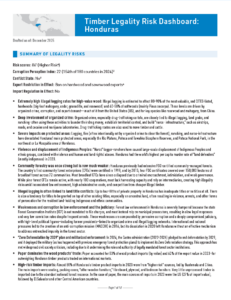
By Forest Trends View PublicationHonduras faces exceptionally high forest-sector risks driven by widespread illegal logging, weak governance, and deep links between organized crime and the timber trade. An estimated 80–90% of high-value, often CITES-listed hardwoods and 40–50% of softwoods are illegally harvested, with demand largely from the United States and China. Illegal logging is closely intertwined with drug trafficking, land grabs, and ranching, devastating protected areas in La Mosquitia and driving violence, displacement, and human rights abuses against Indigenous Peoples. Once-strong community forestry systems have largely collapsed under criminal pressure and weak enforcement, while unresolved land tenure conflicts and a compromised judiciary further entrench impunity. Although Honduras ratified an EU FLEGT Voluntary Partnership Agreement in 2022 and pledged to end deforestation by 2029, implementation challenges, militarized enforcement, and declining EU-bound exports raise concerns about market leakage toward less regulated destinations. The United States remains the main market for Honduran timber and paper products, which should be treated as high risk given persistent illegality, governance failures, and discrepancies in reported trade data.