
Forest Trends’ team was present in Belém, Brazil during COP30, where more than 60,000 delegates gathered in the heart of the Amazon for the annual global climate negotiations. While much of the international reporting has highlighted the shortcomings of this “COP of truth,” including limited progress on phasing out fossil fuels and the absence of a formal United States presence, important yet less visible systemic shifts also emerged. These shifts signal meaningful sources of momentum and hope for the global climate agenda. Some of these milestones include:
1. Largest Indigenous participation in COP history
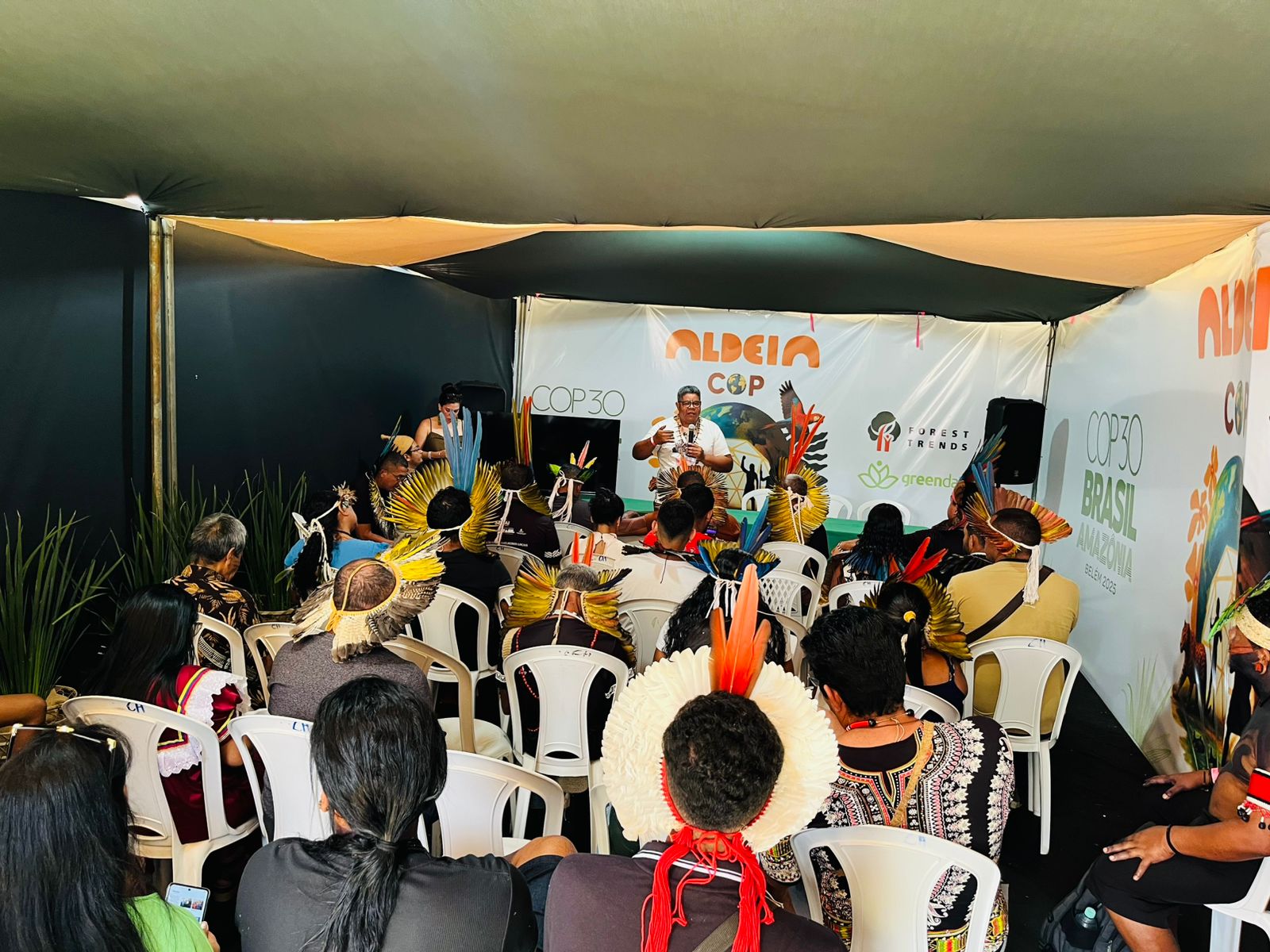
Brazil is the home of the world’s first Ministry of Indigenous Peoples, created in 2023 to correctly place Indigenous leadership at the table around climate and forest policy. At this COP, the Ministry, led by Minister Sônia Guajajara, played a central role in organizing the Indigenous Village COP (Aldeia) that brought over 3,000 Indigenous leaders from around Brazil and the world to Belém. It was the largest Indigenous participation in COP history, and it served as a powerful signal that their leadership is indispensable to any credible climate or forest solution. Forest Trends was a key supporter of the Indigenous Village COP, and we are working closely with partners to help scale a national effort that reaches communities across all of Brazil’s biomes. This partnership reinforces governance, supports Indigenous economies, and builds pathways for climate finance to reach territories in fair and direct ways. The work is national in scale, innovative in approach, and unprecedented in ambition.
Forest Trends hosts an event at its space at Aldeia COP.2. Launching of the Tropical Forest Forever Facility (TFFF)
Another outcome that received significant attention from the media was the launching of a Tropical Forest Forever Facility (TFFF), led by Brazil with approximately $9.5 billion committed at Belém. The fund has been designed to protect against forest loss, including Indigenous lands. While the TFFF’s ultimate goals are much bigger ($100 billion), this was a bold first step.
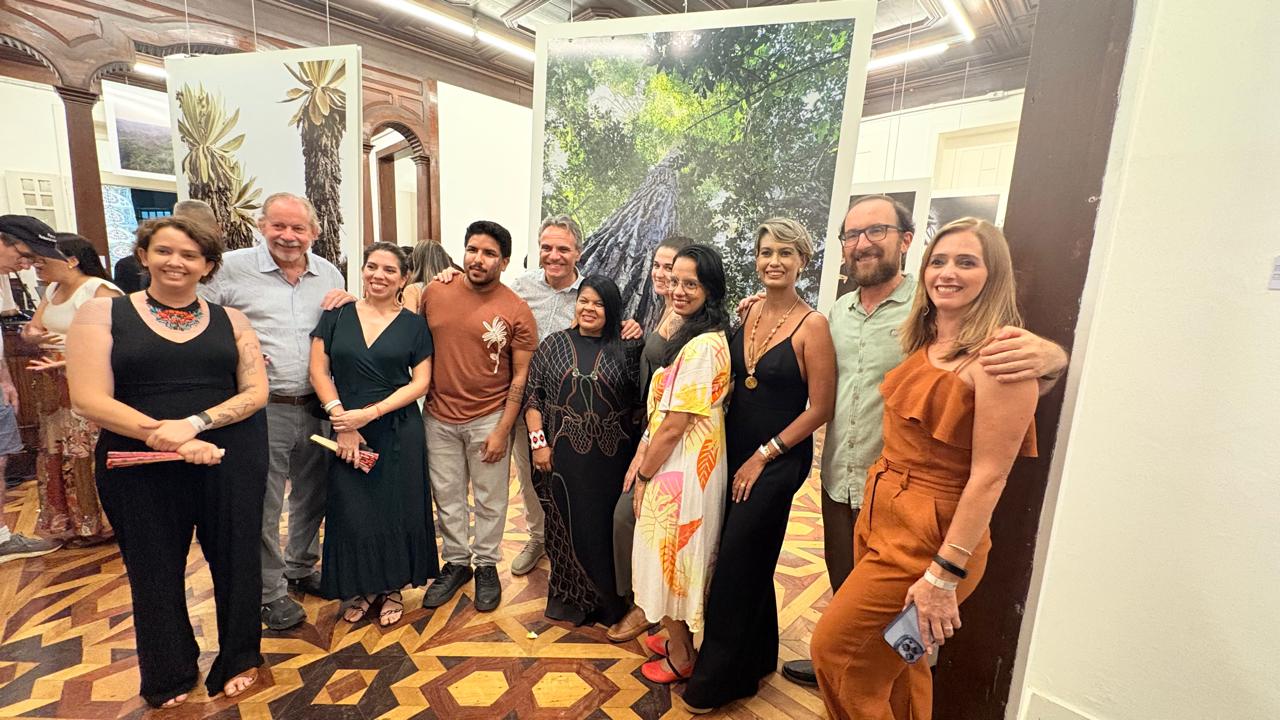
Forest Trends’ team welcomes Minister Sônia Guajajara
to a networking event during COP30.3. Restoring degraded lands through community leadership and global climate commitments
A key COP30 outcome is the commitment to increase financing for tropical forest recovery, reinforced that large-scale restoration and community leadership are essential to global climate and biodiversity goals. Forest Trends’ Communities and Territorial Governance Initiative (CTGI) continues to make progress with the “Arboredo” and “Our Forest, Our Home” projects that have already planted over 1.5 million trees in the Brazilian Amazon and 950 thousand trees at the Atlantic Rainforest, with 1.2 million more expected by next year, engaging over 200 communities and properties and directly impacting 1500 individuals, thus regenerating biodiversity and revitalizing local economies across these two biomes.
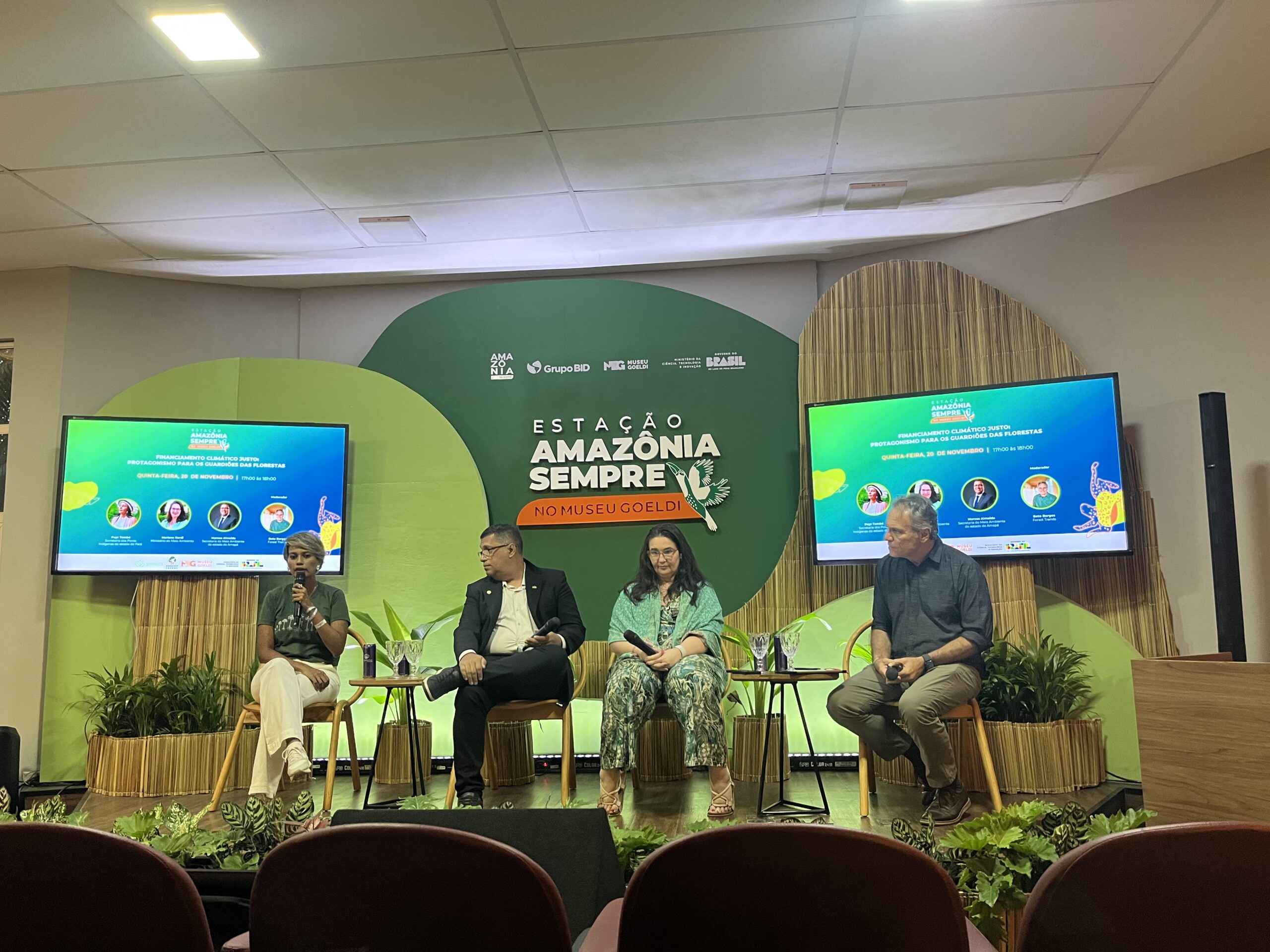
Nicia Coutinho and Beto Borges from CTGI host event
at the Emilio Goeldi Museum about Jurisdictional REDD+,
with speakers from the Ministry of Environment and
the Environment Secretary of Amapá state.4. Consolidation of the Equitable Earth Standard
Another historic milestone of the COP, and a great achievement of our team, was the launch and consolidation of the Equitable Earth Standard. Co-developed by partners alongside Indigenous Peoples and Local Communities (IPs & LCs), this new global standard seeks to direct climate finance to the territories that safeguard the forest. It is the first standard designed around community-led governance, transparent rules, scientific integrity, and real benefits for Indigenous and local communities.
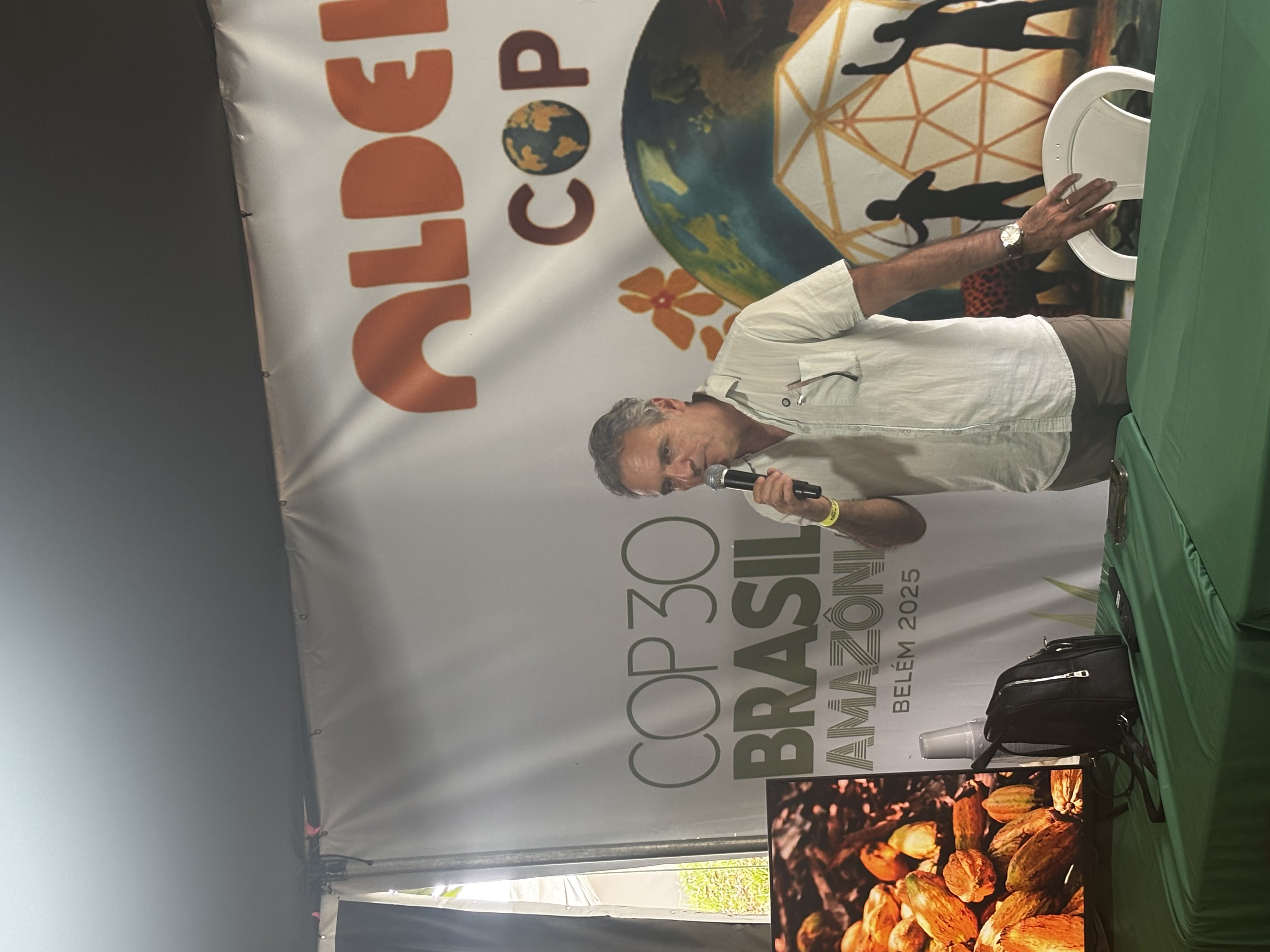
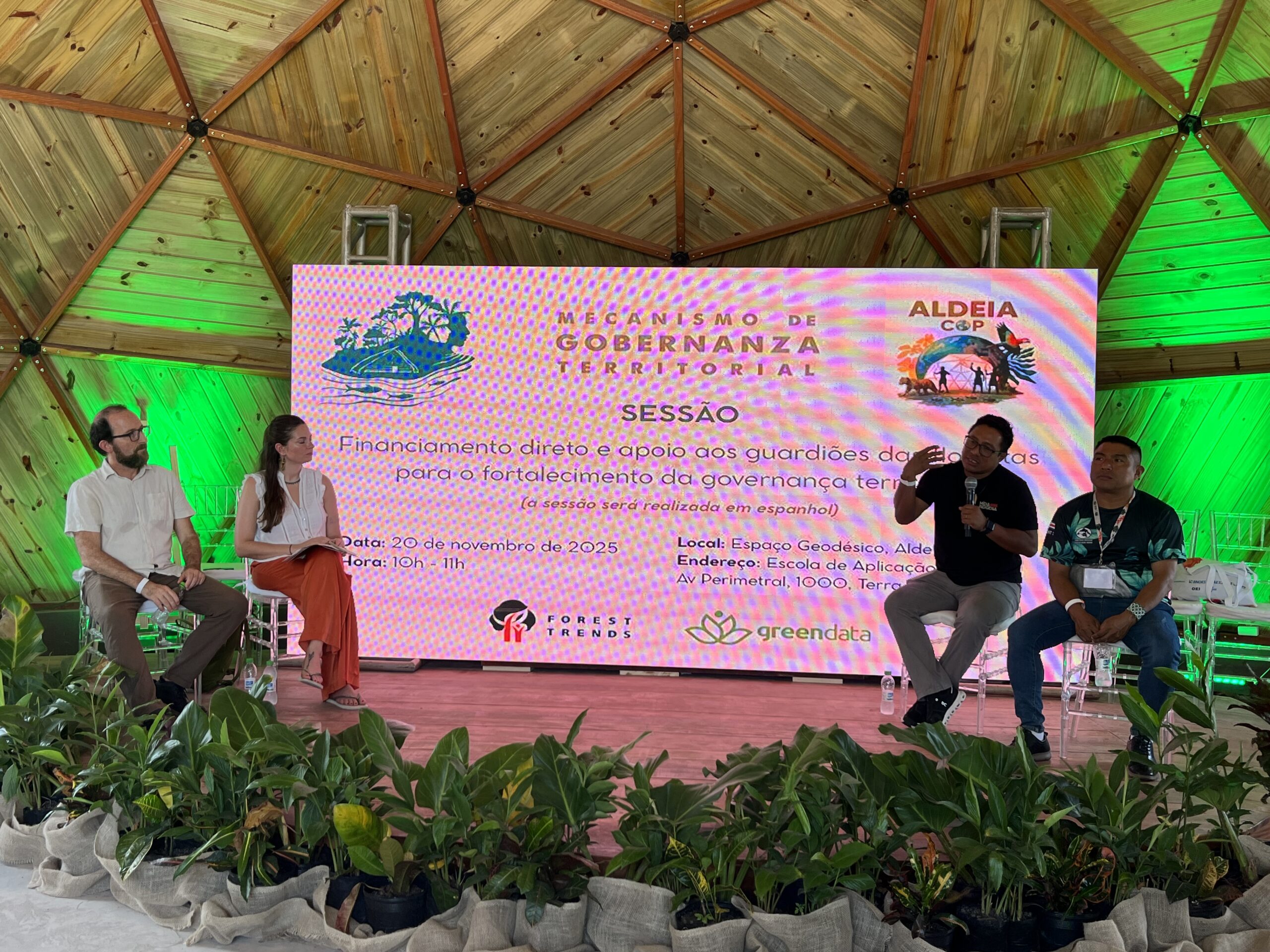
Marcio Halla presents the Territorial Governance Facility
alongside partners at Aldeia COP,

All these firsts point to a simple truth: COP30 was not just another conference. It is a turning point in how the world understands climate leadership. A COP in the Amazon. The first Ministry of Indigenous Peoples in the world. The highest Indigenous participation ever recorded. The first Indigenous Village COP. A new climate finance standard co-created with communities.
This all took place in the heart of the Amazon rainforest, the largest in the world, on an island surrounded on all sides by the majestic Amazon River. It’s easy to dwell on what didn’t happen in Belém, but we are in the fight of our lifetimes and for generations to come.
Viewpoints showcases expert analysis and commentary from the Forest Trends team.
Connect with us on Facebook and Twitter to follow our latest work.